What Rock Is This? Identify Any Rock From a Photo
Beaches, creek beds, road cuts, and back gardens are full of rocks that look interesting and turn out to be hard to name. Our AI identifies the likely rock or mineral from a photo, explains how it formed, and points out the features that confirm or rule out the identification.

- Free to try
- No sign-up
- Results in seconds
Take or upload a photo
AI identifies anything in seconds
1 free identification, no account needed
A rock is identified by what it is made of and how it came together, not by its colour. The three families are igneous, formed from cooled magma, sedimentary, formed from settled and cemented particles, and metamorphic, formed when heat and pressure changed something that already existed. Grain size, layering, hardness and weight are what put a stone into one of those families.
Below are the finds that come up most often when people photograph a rock they cannot name. Wet yours, shoot it in daylight, and say where you found it.
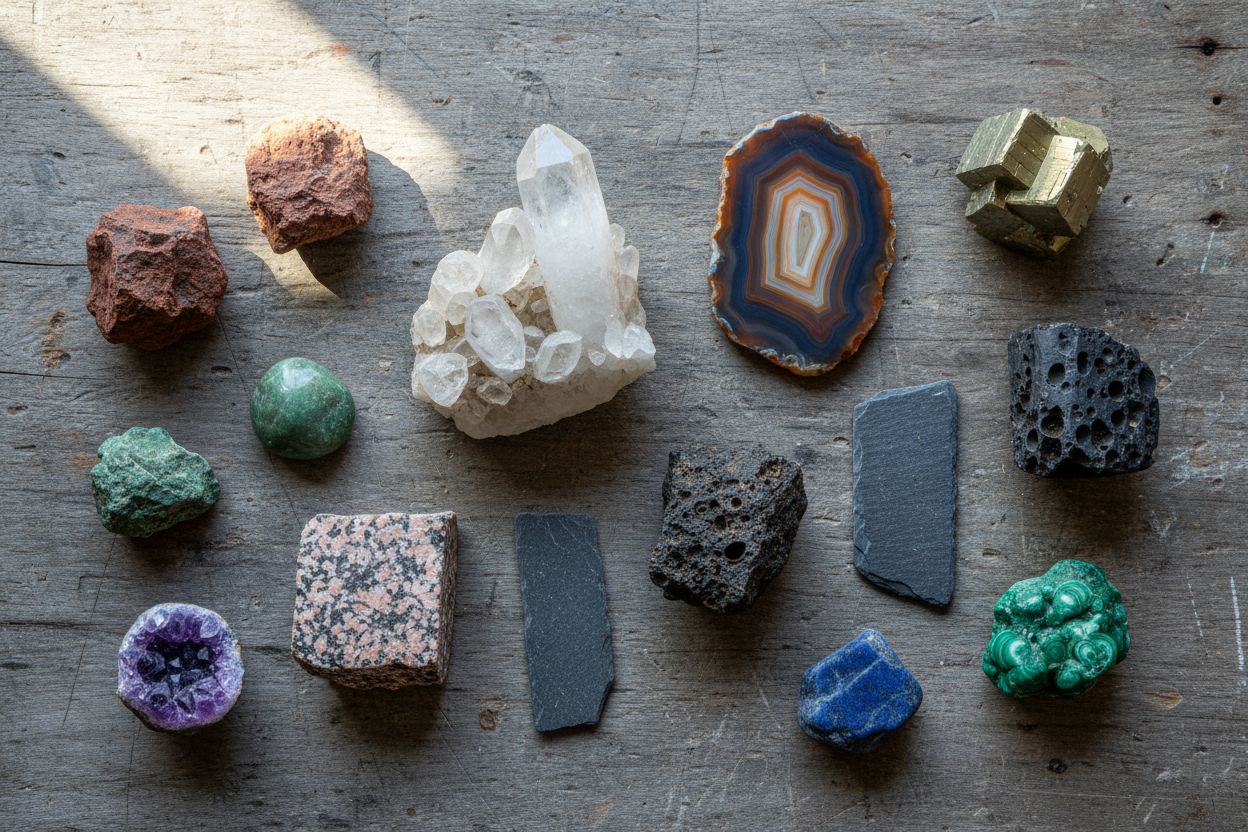
Common types of rocks
A quick reference to the ones people ask about most. Not sure which you have? Snap a photo above and let the AI name it.
Quartz
Milky white to clear, harder than steel, scratches glass. The single most common thing people pick up and the most common thing mistaken for something rarer.
Agate and jasper
Banded or solidly coloured chalcedony, waxy when wet, often rounded from tumbling in water. The most likely of the common finds to be genuinely worth keeping.
Granite and basalt
Granite is speckled with visible crystals. Basalt is dark, fine-grained, and often full of small gas bubbles. Both are extremely common igneous rocks.
Limestone and sandstone
Sedimentary, often layered, usually soft enough to scratch with a knife. Limestone fizzes in vinegar, which is a quick test you can do at home.
Slate and schist
Metamorphic rocks that split into sheets or show a glittery, aligned sparkle from mica crystals lined up by pressure.
Pyrite and iron ores
Heavy, metallic, and magnetic in some cases. Pyrite forms brassy cubes and is the reason fool's gold has a name.
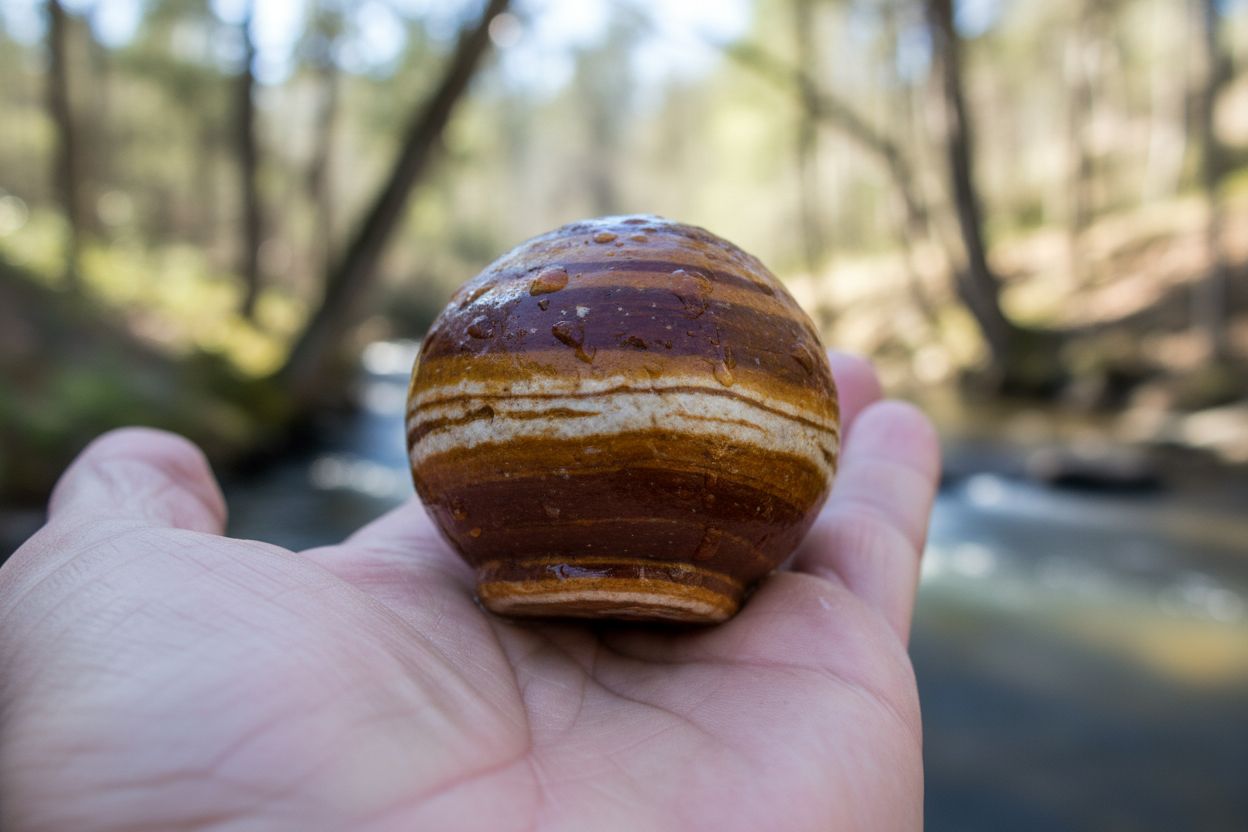
Why identifying rocks matters
Almost every rock people pick up is common, and knowing that quickly is genuinely useful. The rare exception is worth catching: a piece of jasper, an agate, a quartz crystal, or something with actual mineral interest. Naming the rock also tells you what to do next, because the tests that confirm a mineral depend entirely on which one you suspect.
What helps identify rocks
Grain and Texture
Visible crystals point to slow cooling underground. A smooth glassy surface points to fast cooling. Layers or cemented grains point to sedimentary origin.
Colour and Streak
Surface colour misleads, but the streak, the colour of the powder left when you scrape it on unglazed tile, is far more reliable for minerals.
Hardness
Whether a rock scratches glass, or a steel knife scratches it, narrows the field fast. Quartz scratches glass. Calcite does not.
Weight and Density
A rock that feels much heavier than its size suggests often contains iron or another metal, which changes the shortlist immediately.
Layers, Bands and Veins
Stripes, banding, and mineral veins running through a stone say a lot about how and where it formed.
Rock, mineral, or something man-made?
A surprising share of mystery rocks are not rocks. Furnace slag, concrete, brick, glass melt, and old smelting waste all turn up in gardens and on beaches and all look geological at a glance. The giveaways are bubbles and voids that are too round, a glassy shine on a broken face, or a colour that is too even and too bright. If the object is very light for its size and full of holes, slag is far more likely than lava.
Photo tips for the best identification
- 1Wet the rock before photographing. Water brings out colour and banding that dry stone hides completely.
- 2Shoot in daylight rather than under a lamp. Indoor bulbs shift colour and colour matters here.
- 3Include a coin or a finger for scale, and photograph a broken or cut face if there is one, since the inside says more than the weathered outside.
- 4Mention where you found it. A rock from a beach in Cornwall and a rock from a Nevada desert have very different shortlists.
Frequently asked questions
What kind of rock is this?
Photograph the rock, wet, in daylight, and the AI names the most likely rock or mineral, explains how it formed, and lists the features that support the identification. Where two candidates look alike it names both and tells you the test that separates them.
What is the difference between a rock and a mineral?
A mineral is a single substance with a fixed composition and crystal structure, like quartz or calcite. A rock is a mixture of minerals stuck together, like granite, which is quartz, feldspar and mica. Most things people pick up are rocks.
Is my rock worth anything?
Almost certainly not, and that is the honest answer for the vast majority of finds. The exceptions are gem-quality material, good agates and jaspers, and well-formed crystals. The AI flags when something falls in that group, but a rock shop or a local club is the place to confirm it.
Can it tell if my rock has gold in it?
It can flag rocks that host gold and rule out the common lookalikes. Pyrite and mica both fool people constantly. Pyrite is brittle and cubic, mica flakes apart, and gold is soft and stays soft. A photo narrows it, but a streak test settles it.
Identify rocks on the go
Get the What Is This app for unlimited scans, offline mode, and a history that syncs.