2026-07-02
How to Tell If a Rock Is a Meteorite: The Field Test Checklist
Start with the base rate: almost everything people think is a meteorite is not. The community even has a name for it, "meteorwrong." That is not discouragement, it is the reason to run the free field tests before paying for lab analysis. Meteorites have a specific set of traits, and the common impostors fail at least one of them.
The five field tests
| Test | Meteorite | Impostor fails how |
|---|---|---|
| Magnet | Most attract a strong magnet (iron-nickel) | Non-magnetic rock is almost never a meteorite |
| Fusion crust | Thin dark rind from burning through the atmosphere | Slag and lava lack a smooth even crust |
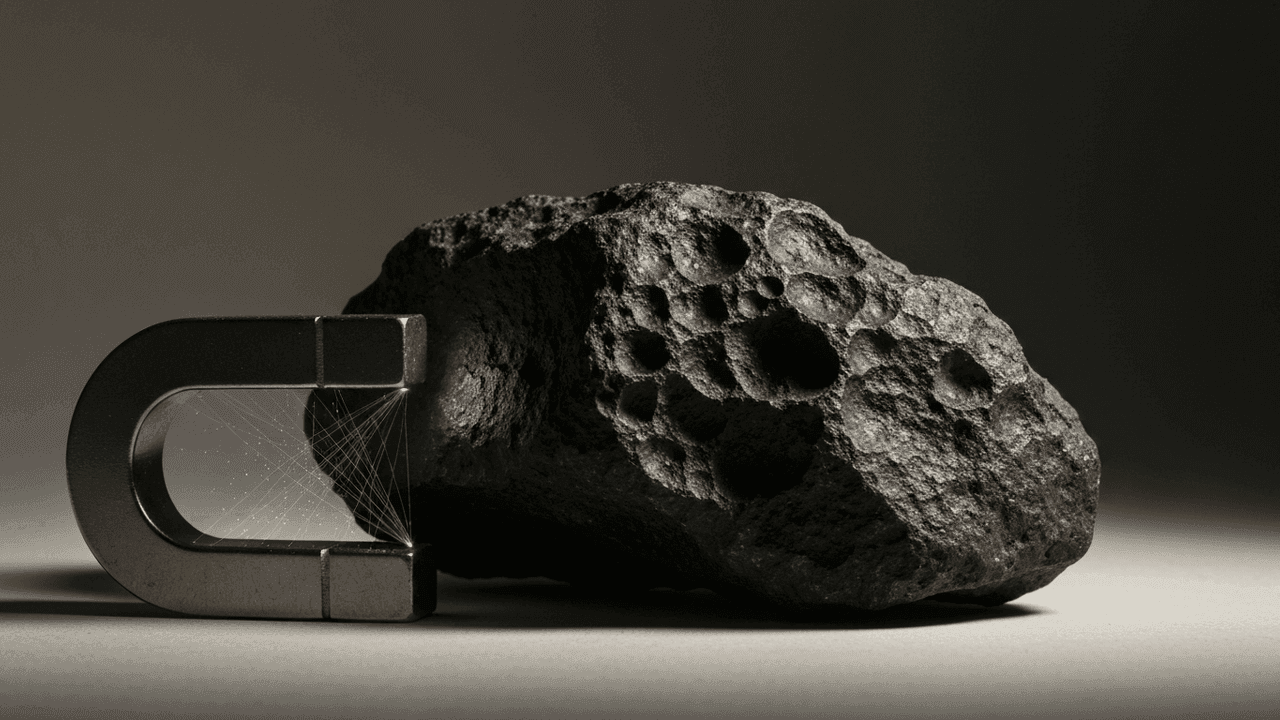
| Regmaglypts | Shallow "thumbprint" dimples on the surface | Bubbly holes (vesicles) mean slag or lava, not a meteorite |
| Heft (density) | Noticeably heavier than an equal-sized normal rock | Light-for-size rules it out |
| Streak | No streak, or faint gray | Red-brown streak means hematite; black streak means magnetite |
The instant disqualifiers
Some features end the question immediately. A meteorite is not:
- Full of bubbles or holes. Vesicles are a dead giveaway for slag (industrial waste) or volcanic rock. Meteorites do not have gas bubbles.
- Leaving a colored streak. Rub it on unglazed ceramic. A rusty red-brown streak is hematite; a gray-black streak is magnetite. Both are common magnetic Earth rocks that fool people constantly. Real meteorites leave little to no streak.
- Light for its size. Meteorites are dense. If it feels like an ordinary rock or lighter, it is one.
- Layered, banded, or full of quartz. Meteorites are not sedimentary and do not contain quartz crystals or crystal pockets.
The two-thirds test people skip
Even a rock that is dark, magnetic, and heavy is usually magnetite or hematite, the two impostors that pass the first glance. The streak test separates them from a genuine meteorite better than anything else you can do at the kitchen table, so never skip it. If your candidate is magnetic and heavy but leaves a strong red or black streak, it is an Earth mineral, and you can stop there.
If it passes everything
A rock that is magnetic, dense, crustless of bubbles, shows possible fusion crust or thumbprinting, and leaves no streak is worth a second look. The next step is a window test: grind a tiny flat spot and look for bright metal flecks (iron-nickel) scattered through stony material, which is characteristic of the common stony meteorites. Beyond that, the only real confirmation is a nickel test or analysis by a university geology department or a meteorite lab. Many will look at a clear photo for free before you send anything.
When the identifier helps
The rock identifier is good at the first cut: flagging the obvious meteorwrongs (slag, magnetite, hematite, basalt) so you do not waste time or money on them. Photograph the whole rock plus any suspected fusion crust and cut surface. If it clears the impostors, treat the app as a starting point and get a real specialist opinion, because genuine meteorites are valuable enough that confirmation is worth doing properly. For the broader "is my rock worth anything" question, the value-check post covers the rest.