Is This a Bed Bug? Find Out in Seconds
Bed bug paranoia drives more pest searches than any other insect, and most of the time the bug in question is a carpet beetle, booklouse, or baby cockroach. Our AI bed bug identifier compares your photo against every common look-alike and tells you what you are actually looking at, with a confidence rating.

- Free to try
- No sign-up
- Results in seconds
Take or upload a photo
AI identifies anything in seconds
1 free identification, no account needed
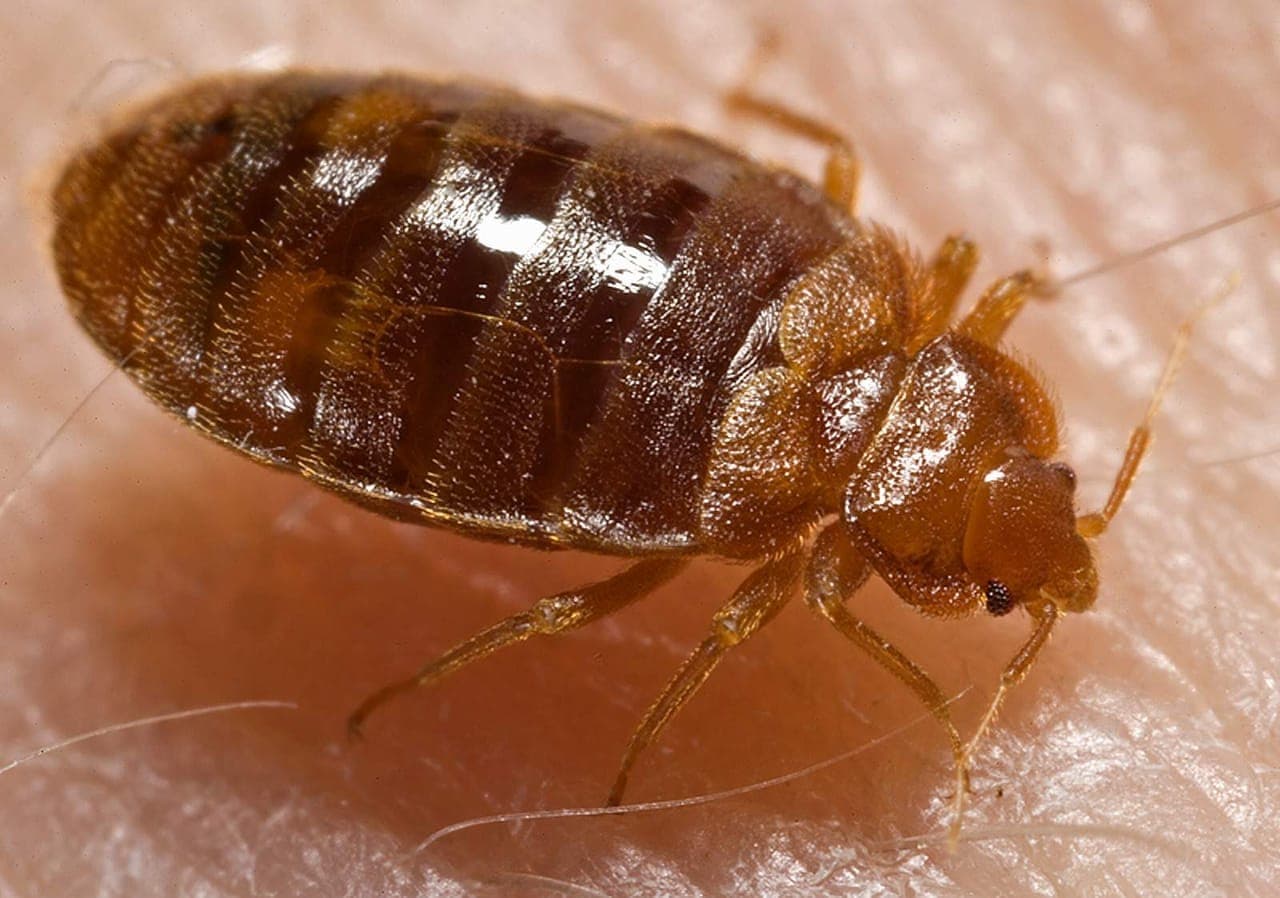
Bed bugs are small, flat, reddish-brown insects about the size of an apple seed, and they hide in the seams of mattresses, furniture, and baseboards. Identifying them quickly matters because an infestation grows fast and is hard to clear. A close photo of the bug, or of the bites and dark spots they leave, helps confirm whether you have bed bugs or a harmless look-alike.
Below are the signs and stages people most often check. Scan what you found, but for a confirmed infestation a pest professional is the safest call.

Common types of bed bugs
A quick reference to the ones people ask about most. Not sure which you have? Snap a photo above and let the AI name it.
Adult bed bugs
Flat, oval, reddish-brown, about 5mm long. Swollen and darker after a recent blood meal.
Nymphs (young)
Smaller and translucent to pale yellow, hard to see. They molt several times as they grow.
Eggs
Tiny, pearly-white, about 1mm, laid in clusters in cracks and seams. Easy to miss without close inspection.
Bite patterns
Small itchy welts, often in a line or cluster on exposed skin. Bites alone cannot confirm bed bugs.
Fecal spots and shed skins
Dark ink-like dots and empty amber shells along mattress seams, a classic sign of an active infestation.
Common look-alikes
Carpet beetle larvae, bat bugs, fleas, and cockroach nymphs are all mistaken for bed bugs.
Why identifying bed bugs matters
Bed bugs are one of the few pests where catching them early changes everything. A single confirmed sighting at week one is a quick professional treatment. The same infestation at month three is months of fighting it. Spraying for bed bugs when you have carpet beetles is a waste of money and toxic to your home for nothing.
What helps identify bed bugs
Apple-seed shape
Adult bed bugs are flat, oval, and roughly the size and shape of an apple seed. Round or domed shapes rule them out.
Reddish-brown color
Unfed adults are translucent to light brown; after a meal they swell and turn dark reddish-brown. Mottled or striped is not a bed bug.
Six legs, no wings
Bed bugs have six legs and never wings. Eight legs is a spider or tick; wings is a beetle.
Where it was found
Mattress seams, headboard cracks, baseboards near the bed. Bugs found on windowsills or in closets are almost always something else.
Bed bugs or something else?
Several harmless insects get blamed on bed bugs. Carpet beetle larvae are fuzzy and striped, fleas are dark and jump, and cockroach nymphs are faster and more elongated. True bed bugs are flat, wingless, oval, and stay near where people sleep. Correctly telling them apart decides whether you need a full pest-control response or just a vacuum, so confirm before you panic.
Photo tips for the best identification
- 1Photograph at maximum zoom with the bug filling the frame.
- 2Capture in a clear container or sealed bag — never squash, you may need it for confirmation.
- 3Include a coin or ruler in the photo for scale.
- 4Take a second photo of nearby fabric — black spots or shed skins are diagnostic.
Frequently asked questions
How do I tell a bed bug from a carpet beetle?
Bed bug nymphs are flat and translucent with six legs. Carpet beetles are roundish, hard-shelled, often mottled black and white, and the larvae are striped fuzzy worms. Carpet beetles do not bite humans.
Can AI confirm bed bugs definitively?
AI gets the species call right the vast majority of the time, but bed bugs are the one case where we recommend a second opinion. Take the specimen to a local extension office or pest pro before paying for treatment.
What do I do if it is a bed bug?
Stop sleeping in the room, do not move belongings to other rooms (you will spread it), bag and seal anything you remove, and call a licensed pest professional. DIY treatment fails more than it works.
Identify bed bugs on the go
Get the What Is This app for unlimited scans, offline mode, and a history that syncs.
Related bed bugs identifiers
Bugs identifier
Found a strange bug? Snap a photo and AI tells you what it is, whether it bites, and if it is dangerous. Spiders, beetles, ants, and more.
Spiders identifier
Snap a photo and find out if the spider is dangerous, harmless, or one of the common house species. Includes guidance on the bites that actually matter.
Caterpillars identifier
Snap a photo and find out the species, what it will turn into, and whether it stings. Monarchs, swallowtails, woolly bears, and the stinging species worth avoiding.
Ticks identifier
Snap a photo and find out the species, the diseases it can carry, and what to do next. Deer tick, dog tick, lone star, brown dog, and the harmless look-alikes.
Butterflies identifier
Snap a photo of a butterfly and AI names the species. Identify monarchs, swallowtails, fritillaries, and more by wing pattern and color in seconds.
Bees identifier
Snap a photo of a bee and AI tells you what it is. Identify honey bees, bumblebees, carpenter bees, and bee-mimics, and tell bees from wasps.
Ants identifier
Snap a photo of an ant and AI names the species. Identify carpenter ants, fire ants, odorous house ants, and more, and learn if they bite or damage wood.
Moths identifier
Snap a photo of a moth and AI names the species. Identify luna moths, sphinx moths, pantry moths, and clothes moths by wing pattern and shape.
Beetles identifier
Snap a photo of a beetle and AI names the species. Identify ladybugs, June bugs, ground beetles, and pests like the Japanese beetle in seconds.
Cockroaches identifier
Snap a photo of a roach and AI names the species. Tell German, American, Oriental, and harmless wood roaches apart and learn how to respond.