What Is This Garden Tool? Identify Any Garden Tool
Cleared out a shed, inherited a set of yard tools, or cannot tell your loppers from your pruners? Our AI names garden hand tools and long-handled implements, explains the job each one does, and points out the ones people constantly mix up.

- Free to try
- No sign-up
- Results in seconds
Take or upload a photo
AI identifies anything in seconds
1 free identification, no account needed
Garden tools are identified by their working end and their handle length. A scoop digs, prongs cultivate, a flat blade edges, and cutting jaws prune, while the handle tells you whether it is for kneeling bed work or standing jobs. Once you read those two things, most yard tools name themselves, including the specialty ones people rarely recognize.
Below are the garden and yard tools people most often need to place, plus the pairs that get mixed up constantly. Scan yours to learn what it is and the job it is built for.
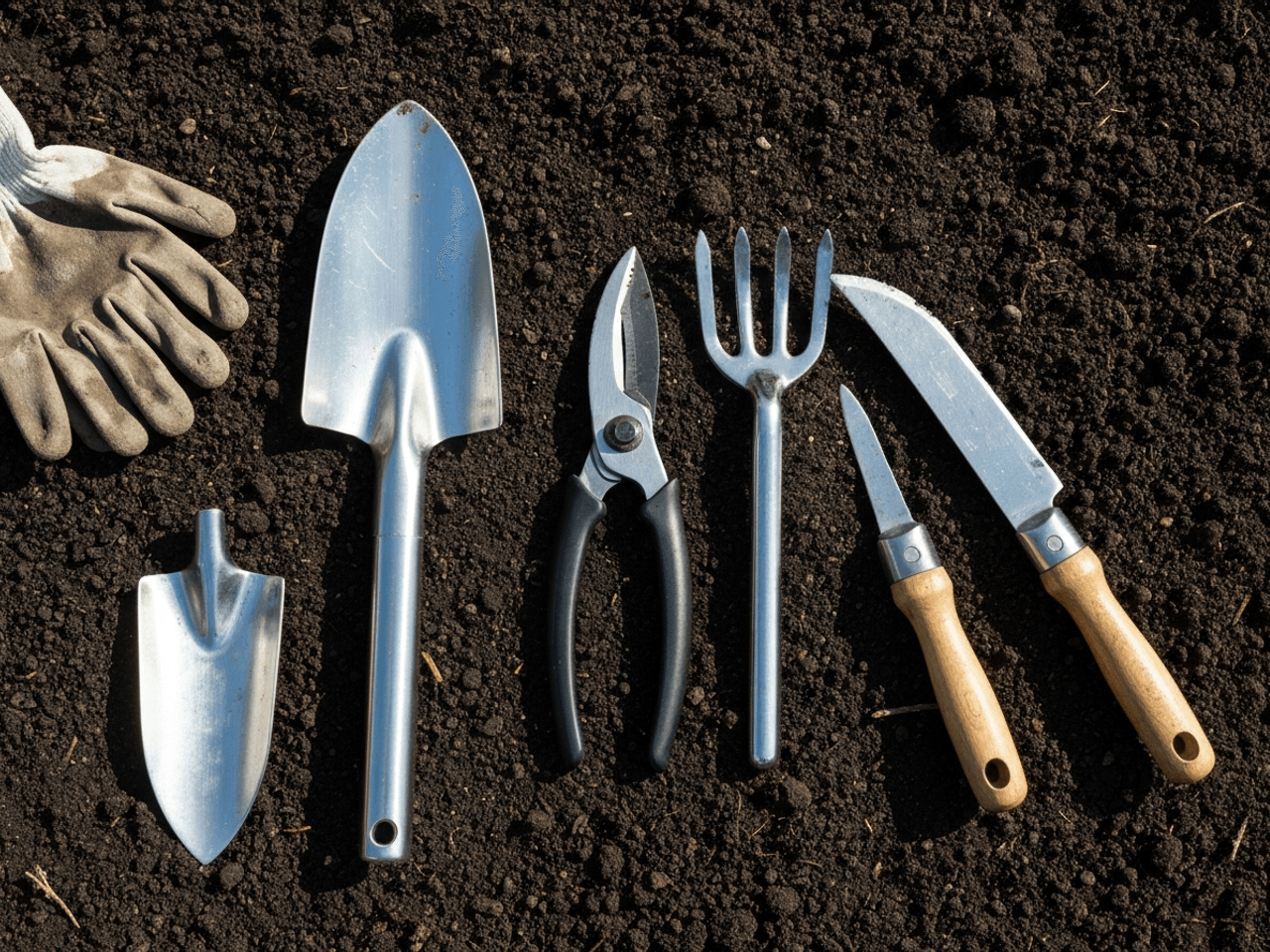
Common types of garden tools
A quick reference to the ones people ask about most. Not sure which you have? Snap a photo above and let the AI name it.
Trowels and hand diggers
Hand trowels, transplanters, and scoops for planting and close-up digging. The blade width hints at the job.
Pruners, loppers, and shears
Cutting tools that scale from fingertip stems to inch-thick branches to hedge faces. Bypass vs anvil matters.
Cultivators and hand forks
Pronged tools that loosen soil, lift weeds, and aerate beds without a full spade.
Long-handled diggers
Spades, shovels, and border forks for standing digging and turning, distinguished by blade shape.
Hoes and edgers
Flat, draw, and stirrup hoes plus edging knives, each ground for a specific weeding or bordering job.
Specialty hand tools
Hori-hori knives, dibbers, bulb planters, and daisy grubbers that people find and rarely recognize.
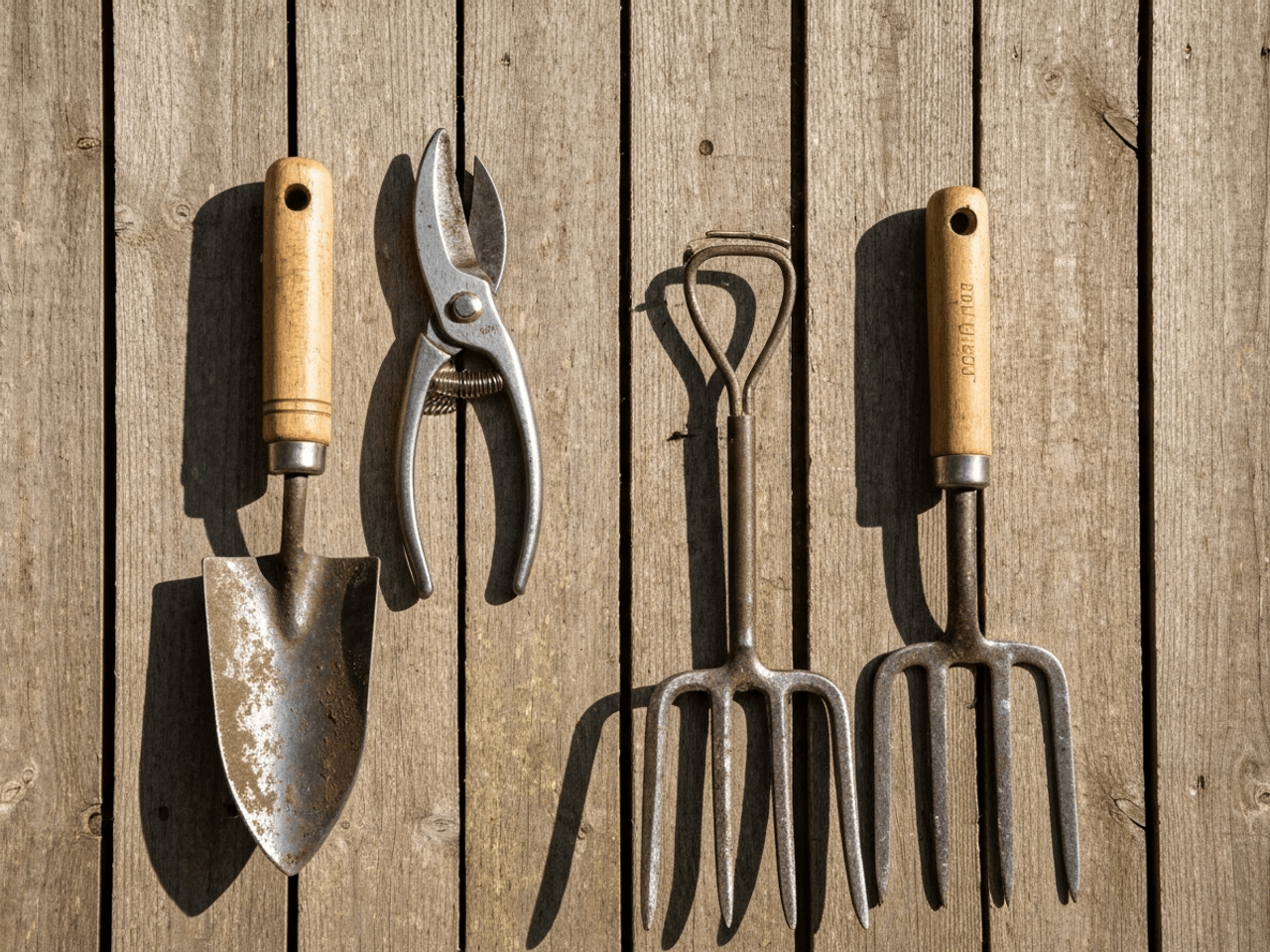
Why identifying garden tools matters
Using the wrong garden tool is how you crush a stem you meant to cut clean or snap a handle prying at roots. Each tool has a job, and matching the tool to the task protects both your plants and the tool. Naming an unfamiliar implement is the first step to using it right.
What helps identify garden tools
Working End
Blade, scoop, prongs, or cutting jaws. The head shape reveals whether a tool cuts, digs, lifts, or rakes.
Handle Length
Hand tool vs long-handled. Length separates close-up bed work from standing jobs like digging and raking.
Cutting Mechanism
Bypass vs anvil blades, ratchet actions, and shear geometry distinguish pruners, loppers, and shears from each other.
Head Material and Wear
Forged steel, stainless, or cast heads, and the wear pattern, hint at the tool's job and quality.
Bypass or anvil? Why it changes the cut
Garden cutting tools come in two actions and using the wrong one damages plants. Bypass blades pass each other like scissors and give a clean cut close to living stems, so they are right for pruning green growth. Anvil blades close onto a flat plate and crush as they cut, which is fine for dead or woody material but bruises live stems. Telling them apart at a glance is hard, so the AI reads the blade geometry from a photo and tells you which you have.
Photo tips for the best identification
- 1Photograph the working head clearly, plus the whole tool for handle length and proportion.
- 2For cutting tools, show the blades open so the bypass or anvil action is visible.
- 3Capture any brand stamp on the head or ferrule.
- 4Note the job you think it does. Digging, cutting, or raking helps confirm the match.
Frequently asked questions
What is this garden tool used for?
Snap a photo and the AI names the tool and explains its job, whether it is a transplanting trowel, a hori-hori knife, a bulb planter, a cultivator, or a pair of loppers.
What is the difference between pruners and loppers?
Both cut stems, but hand pruners are for small close-up cuts up to about pencil-thick, while loppers have long handles and bigger jaws for branches up to an inch or more. The AI tells them apart and flags bypass vs anvil blades.
Can it identify old or unusual garden tools?
Yes. Vintage hand tools, region-specific implements, and specialty tools like dibbers, daisy grubbers, and edging knives are all recognized.
Will it tell me what a long-handled tool is?
Yes. Hoes, cultivators, edgers, and their many variants are identified by head shape, along with the exact job each variant is built for.
Identify garden tools on the go
Get the What Is This app for unlimited scans, offline mode, and a history that syncs.
Related garden tools identifiers
Tools identifier
Snap a photo of any tool and AI tells you what it is, what it's called, and what it's used for. Free identifier for hand tools, vintage tools, and hardware.
Vintage Tools identifier
Found an old tool and cannot name it? Snap a photo and AI identifies vintage and antique tools, the maker's mark, the era, and whether it is worth collecting.
Power Tools identifier
Snap a photo and AI identifies power tools, cordless tools, and their attachments. Get the type, likely brand, and what the tool is used for in seconds.