What Is Wrong With My Plant?
Most plant problems come down to a short list of causes, and they look confusingly alike. Our AI reads the symptom pattern, which leaves, what the marks look like, where they start, to separate fungal disease from insect damage from a watering mistake, and tells you which one you are dealing with.

- Free to try
- No sign-up
- Results in seconds
Take or upload a photo
AI identifies anything in seconds
1 free identification, no account needed
Diagnosing a sick plant is a process of elimination, and the useful shortcut is to ask which leaves went first. Problems that start at the bottom and work up are almost always about water or nutrients. Problems that appear on new growth, or randomly across the plant, are usually pests or disease. That one question splits the possibilities in half before you look at a single spot.
Below are the causes behind most plant problems and what each one actually looks like. Photograph an affected leaf, the underside of it, and the whole plant.
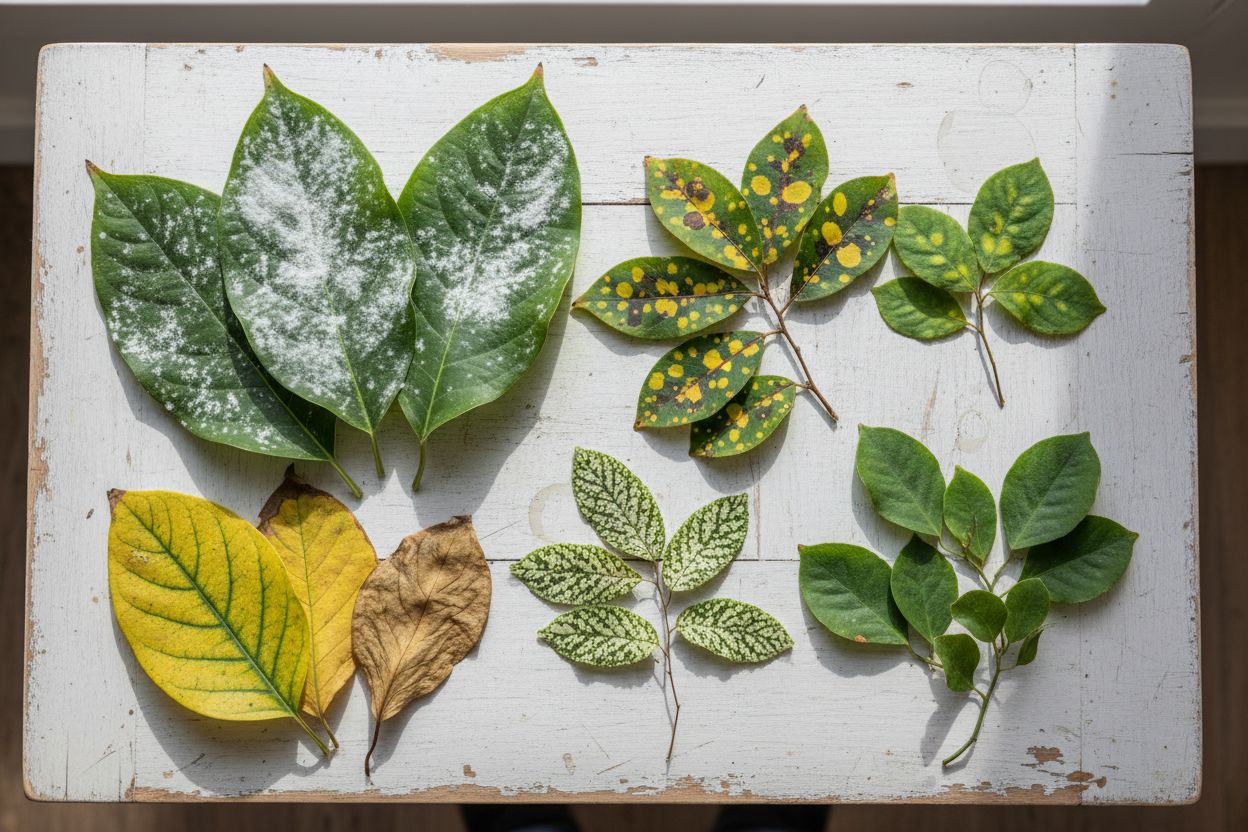
Common types of plant problems
A quick reference to the ones people ask about most. Not sure which you have? Snap a photo above and let the AI name it.
Overwatering and root rot
Yellow soft lower leaves, soil that never dries, sometimes a sour smell and fungus gnats. The single most common houseplant killer.
Powdery mildew
A white floury coating on the leaf surface that wipes off. Fungal, driven by humidity and still air, and very common on squash, roses and indoor plants.
Leaf spot and rust
Defined round spots, often brown with a yellow halo, or raised orange pustules on the underside. Fungal and spread by splashing water.
Spider mites
Fine pale stippling across the leaf and delicate webbing in the joints. The mites themselves are barely visible dots that move. Thrive in dry warm air.
Aphids, mealybugs and scale
Sap suckers that cluster on stems and leaf undersides. Aphids are green or black clusters, mealybugs are white cottony blobs, scale are small brown bumps that scrape off.
Nutrient deficiency
Uniform pale yellowing of older leaves usually means nitrogen. Yellow between still-green veins usually means iron or magnesium. Growth slows but nothing rots or spots.
Why identifying plant problems matters
The treatments contradict each other, which is why guessing is expensive. Fungicide does nothing for spider mites. More water kills a plant with root rot faster. Repotting a plant with a nitrogen deficiency wastes a month. Naming the actual cause is the whole job, and the fix is usually simple once you have.
What helps identify plant problems
Which Leaves Are Affected
Damage starting on the oldest lower leaves points to watering or nutrients. Damage on new growth points to pests or a root problem.
The Shape of the Marks
Round spots with defined edges suggest fungus. Ragged holes suggest chewing insects. Fine pale stippling suggests sap suckers like mites.
Colour and Progression
Yellow between green veins, uniform pale yellow, brown crispy edges, and black mushy patches each mean something different.
The Underside of the Leaf
Most pests live on the underside. Turning a leaf over answers the question more often than any other single check.
Soil and Roots
Soil that stays wet, a sour smell, fungus gnats around the pot, and dark soft roots all point to overwatering and root rot.
Overwatered or underwatered?
They look alike and the treatments are opposites, which is why so many plants die of the wrong fix. An overwatered plant has soft, limp, yellowing leaves, soil that is still damp days after watering, and often a faint sour smell from the pot. An underwatered plant has dry, crispy, brown-edged leaves, soil pulling away from the sides of the pot, and it perks up within hours of a drink. If the leaves are limp and the soil is wet, stop watering immediately and check the roots.
Photo tips for the best identification
- 1Photograph a clearly affected leaf close up, in daylight, and then the whole plant. The pattern across the plant matters as much as the individual leaf.
- 2Always take one photo of the leaf underside. It is where mites, aphids, scale and whitefly actually are.
- 3Say how often you water and whether the pot drains. Half of all plant problems are answered by that one sentence.
- 4Mention whether it started on old leaves or new ones, and how fast it spread.
Frequently asked questions
Why are my plant's leaves turning yellow?
Overwatering is the most common cause by a wide margin, and it usually starts on the lower leaves with soil that stays damp. Underwatering yellows leaves too but they go crispy rather than soft. Yellow between green veins on new growth is usually a nutrient issue. Photograph the leaf and the soil surface and the AI will tell you which pattern it matches.
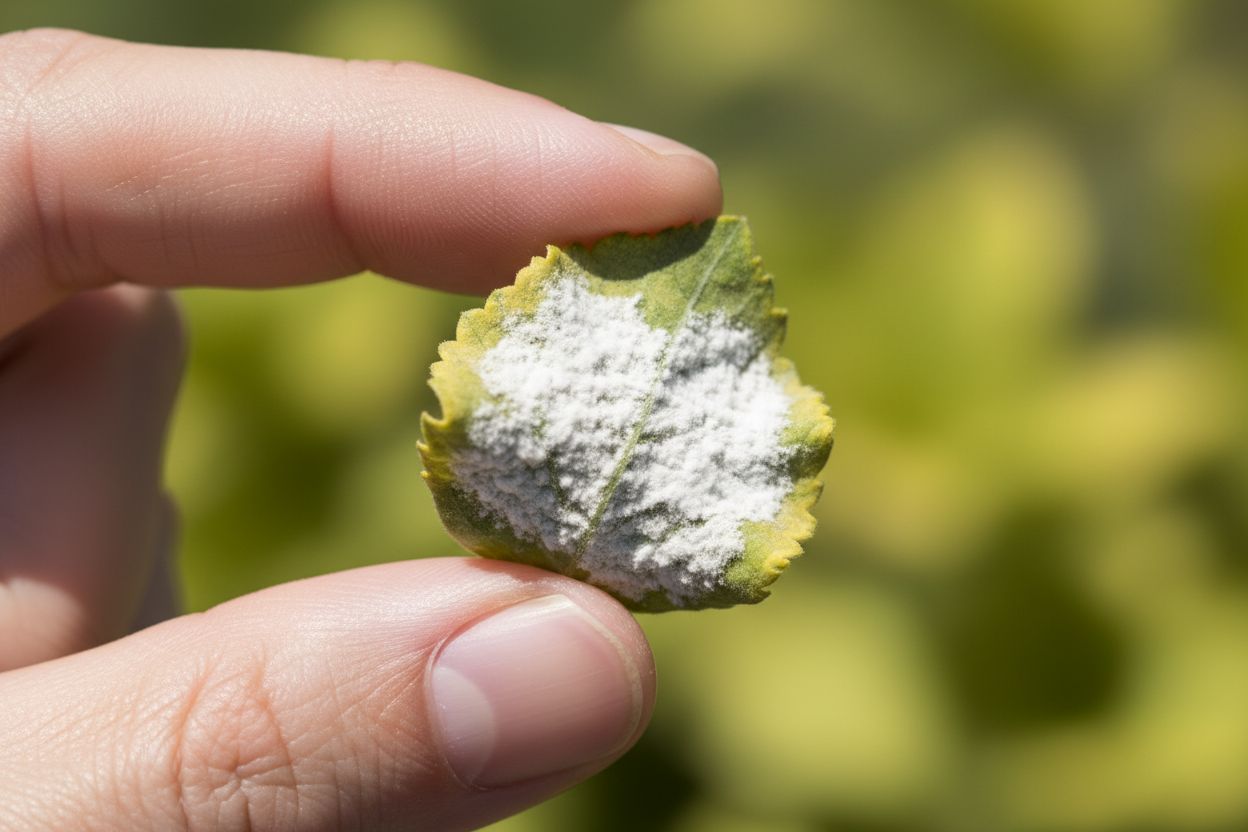
What is the white powder on my plant?
Almost always powdery mildew, a fungus that looks like flour dusted on the leaf surface and wipes off with a finger. It thrives in humid air with poor circulation. If the white is fluffy and clustered where the leaf meets the stem instead, that is mealybugs, which are insects and need a different treatment.
How do I know if it is a pest or a disease?
Turn the leaf over and look closely, ideally with your phone camera zoomed in. Pests are physically there: tiny moving dots, sticky residue, fine webbing, or small brown bumps that scrape off. Diseases leave marks without any organism visible on the surface.
Can I save a plant with root rot?
Sometimes, if you catch it early. Take it out of the pot, cut away every dark mushy root back to firm white tissue, repot in fresh dry mix with real drainage, and water far less than before. If the stem base is soft as well, the plant is usually past saving.
Identify plant problems on the go
Get the What Is This app for unlimited scans, offline mode, and a history that syncs.