What Is This Silver Hallmark? Identify Marks and Makers
A row of tiny stamps on the base of a spoon is a complete record of what a piece is, who made it and when. Our AI reads those marks, separates real silver from plate, and explains what each symbol in the sequence means.

- Free to try
- No sign-up
- Results in seconds
Take or upload a photo
AI identifies anything in seconds
1 free identification, no account needed
A British hallmark is a sequence, and each stamp in it answers a different question. The standard mark says what the metal is. The town mark says where it was tested. The date letter says when. The maker's mark says who. Read in order, four small punches tell you nearly everything about a piece of silver.
Below are the marks you will actually encounter and what each one means. Photograph the whole row together, close and in side light.
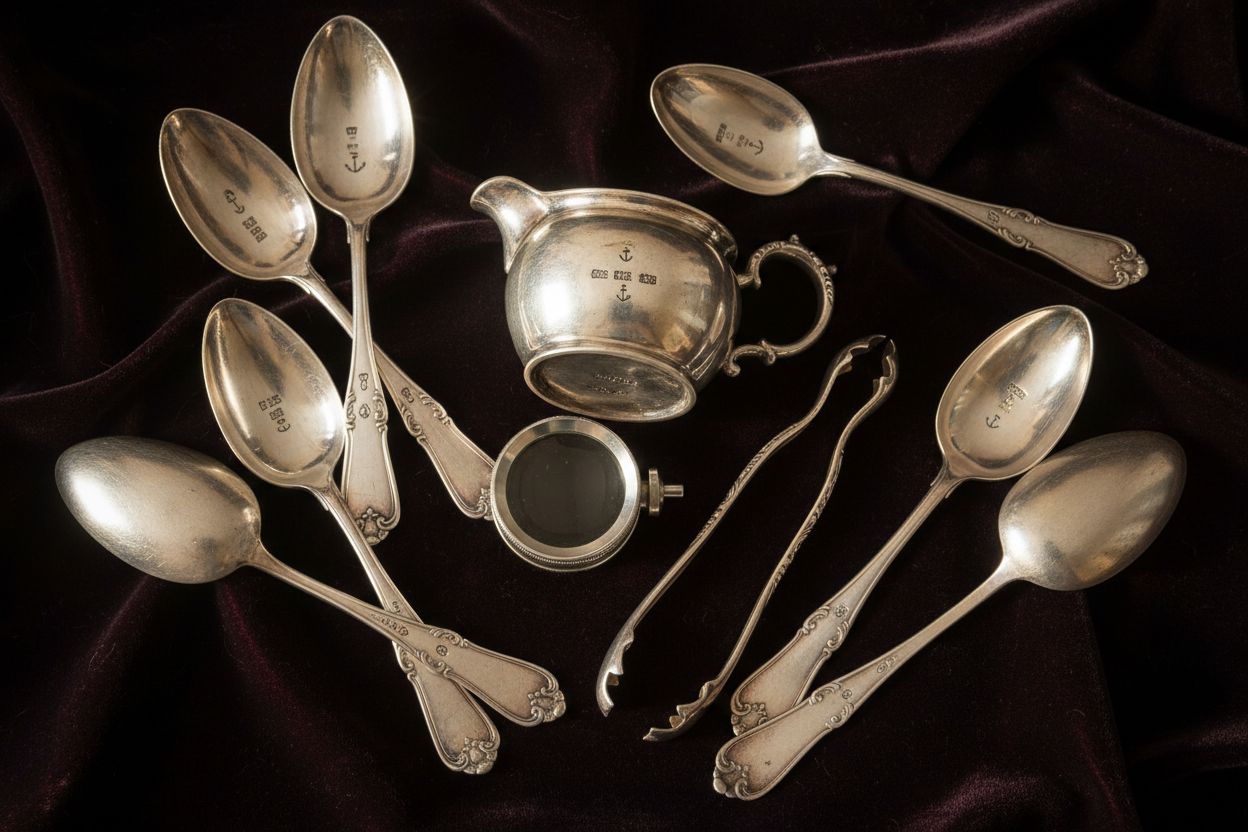
Common types of silver hallmarks
A quick reference to the ones people ask about most. Not sure which you have? Snap a photo above and let the AI name it.
Lion passant
A walking lion in profile. The English sterling standard mark, used since the 1500s and the single most important symbol to recognise.
Town marks
Leopard's head for London, anchor for Birmingham, crown for Sheffield, castle for Edinburgh. The assay office that tested and stamped the piece.
Date letters
A single letter in a shield, changed annually. The letter style and shield shape together pin a piece to an exact year.
925 and continental marks
The numeric millesimal standard used internationally. European silver also uses 800, 830 and 900, which are silver but below the sterling standard.
Sterling and Coin
American silver rarely uses pictorial hallmarks. It is typically stamped Sterling, or Coin on older pieces, alongside a maker's name.
EPNS and plate marks
EPNS, EP, A1, Silver on Copper, and various crowns and shields designed to resemble hallmarks. All of them mean plated.
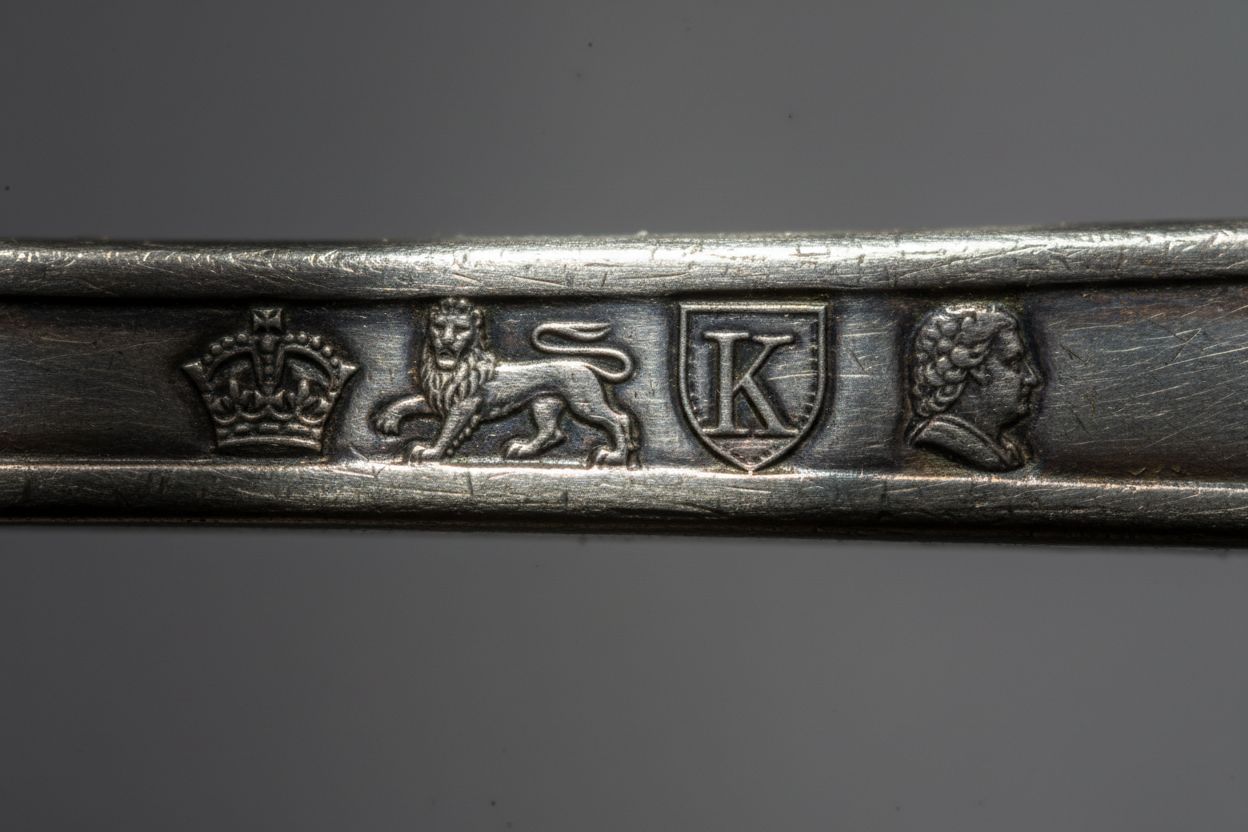
Why identifying silver hallmarks matters
The gap between sterling silver and silver plate is the difference between scrap value in real money and almost nothing. That distinction lives entirely in a few millimetres of stamped metal, and people give away genuine silver constantly because they cannot read it. It runs the other way too, since plenty of heavily marked plate looks exactly like the real thing.
What helps identify silver hallmarks
The Standard Mark
The lion passant means English sterling. A thistle means Edinburgh, a crowned harp means Dublin. The number 925 means sterling almost anywhere.
The Assay Office Mark
A town symbol showing where the piece was tested. A leopard's head is London, an anchor is Birmingham, a crown was Sheffield.
The Date Letter
A single letter in a shaped shield. Each assay office ran its own alphabet cycles, so the letter plus the shield shape gives an exact year.
The Maker's Mark
Usually initials in a shaped punch, identifying the silversmith or the firm that registered the piece.
Plate Marks
EPNS, EP, A1, Silver on Copper and similar wording all mean plated. Plate marks often imitate hallmark layout deliberately.
Sterling or silver plate?
The marks answer it first. A lion passant or 925 means sterling, and any spelled-out wording like EPNS or Silver on Copper means plate. Where the marks are worn, look at the wear points. Plate rubs through on high edges and handle tips, showing a warmer copper or dull yellow metal underneath, while solid silver is the same colour all the way through. Sterling also tarnishes to an even warm grey-black, whereas failing plate goes patchy and blotchy.
Photo tips for the best identification
- 1Get as close as your camera will focus and still hold sharp. Hallmarks are tiny and a blurry photo cannot be read.
- 2Angle a light across the marks rather than straight on. Side light throws the stamped impressions into relief.
- 3Photograph the entire row of marks together, in order, rather than one at a time. The sequence is part of the meaning.
- 4Do not polish the marks before photographing. Aggressive polishing wears hallmarks away and destroys value permanently.
Frequently asked questions
Is my silver real or plated?
Look for the standard mark. A lion passant, a thistle, or the number 925 means solid sterling. Any wording such as EPNS, EP, A1, or Silver on Copper means plated. If there are no marks at all, it is more likely plate, though some older and some foreign silver is genuinely unmarked.
What does EPNS mean?
Electro Plated Nickel Silver. A thin layer of silver deposited over a nickel alloy base. It contains almost no silver by weight and has little melt value, although good Victorian and Edwardian plate still has decorative worth.
How do I find the year from a hallmark?
The date letter does it, but only in combination with the assay office and the shape of the surrounding shield, because each office reused the same letters across different cycles. Photograph the whole row of marks and the AI works through the sequence.
What does 925 mean?
It means the metal is 92.5 percent pure silver, which is the sterling standard. The mark is used internationally and is the most common silver mark you will find on modern and imported pieces.
Identify silver hallmarks on the go
Get the What Is This app for unlimited scans, offline mode, and a history that syncs.