Identify Your Sea Glass, Colour, Age and Rarity
Every piece of sea glass started as something else: a bottle, a jar, a ship's light, a piece of tableware. Our AI reads colour, frosting and shape to place a piece on the rarity scale, suggest its likely origin, and tell genuine surf-tumbled glass from the craft glass sold by the bag.

- Free to try
- No sign-up
- Results in seconds
Take or upload a photo
AI identifies anything in seconds
1 free identification, no account needed
Sea glass is graded on two things: what colour it is, and how completely the sea has finished it. Colour tells you what it came from and how scarce it is, because the glass industry made some colours by the million and others barely at all. Frosting and rounding tell you how long it has been in the water, and whether it has been in the water at all.
Below are the colour classes collectors use, from the ones on every beach to the ones people search years for. Photograph yours dry, on a plain background, in daylight.
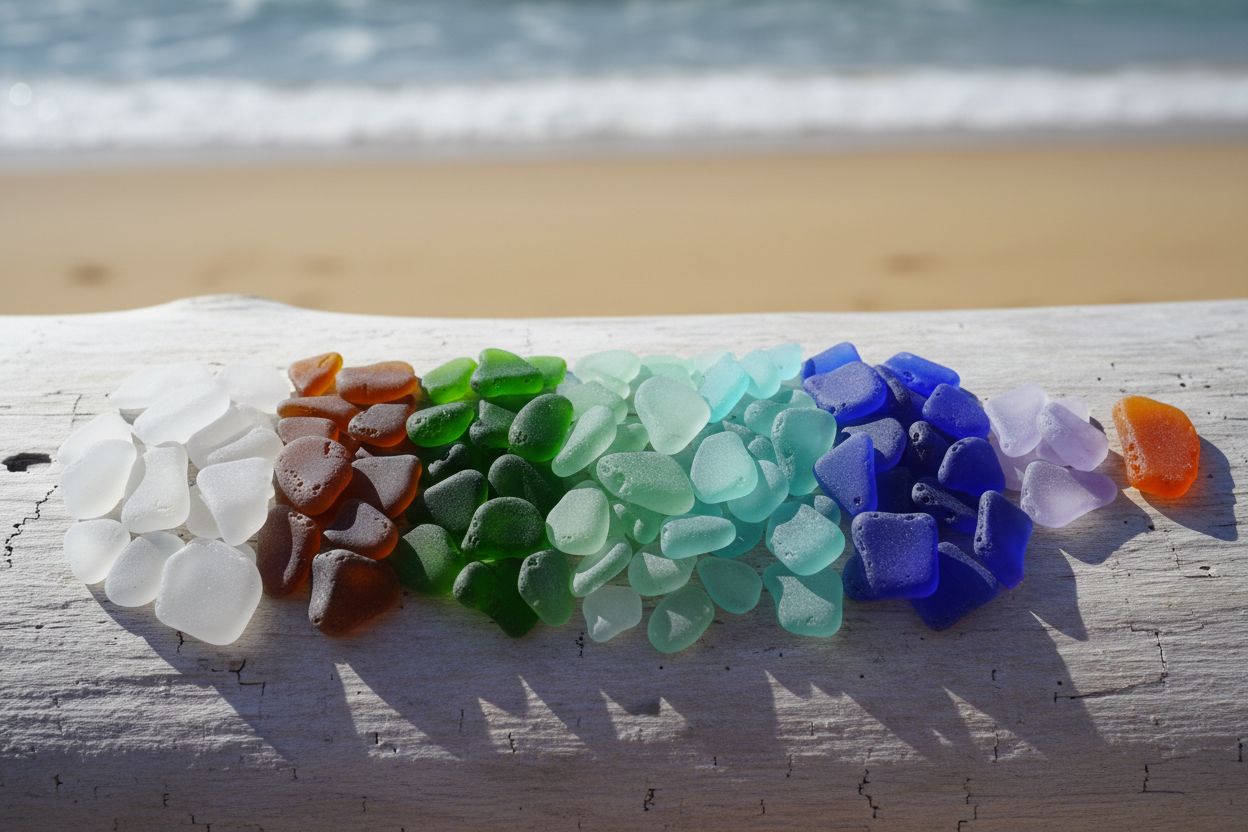
Common types of sea glass
A quick reference to the ones people ask about most. Not sure which you have? Snap a photo above and let the AI name it.
White, brown and kelly green
The common three, from clear jars, beer bottles and soda bottles. Found on almost any beach with a history of people on it.
Seafoam and aqua
Pale green-blue from old bottles and canning jars, coloured by iron in the sand rather than deliberately. Uncommon and much loved.
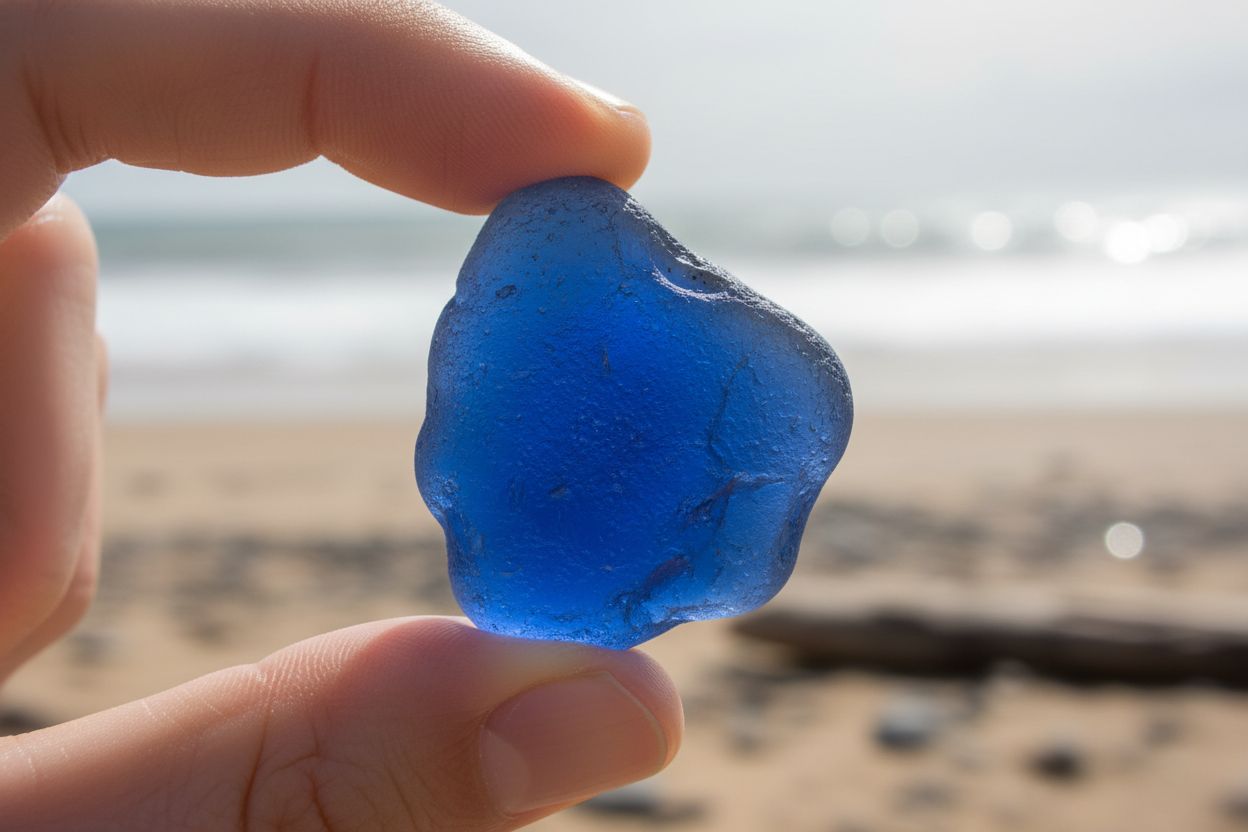
Cobalt blue
Deep, saturated blue from medicine bottles, poison bottles and milk of magnesia. Genuinely scarce and instantly recognisable.
Lavender and purple
Clear glass made with manganese that turned violet after decades in sunlight. The colour itself dates the piece to before roughly 1915.
Red and orange
The rarest of all. Red glass was expensive and made in small quantities, and orange was barely made at all. Most collectors never find one.
Black glass
Looks black until you hold it to the light and see deep olive or amber. Usually very old, from thick eighteenth and nineteenth century bottles.
Why identifying sea glass matters
Sea glass is graded almost entirely on colour and condition, and the gap between the two ends is large. Common white and brown turns up on every beach, while orange, red and true black are finds people collect for years without seeing. Knowing which you have decides whether it goes in a jar or into a piece of jewellery.
What helps identify sea glass
Colour
Colour is the primary rarity driver. White, brown and kelly green are everywhere. Orange, red, turquoise and grey are genuinely scarce.
Frosting and Pitting
Decades in surf and sand etch a glass surface to an even matte frost with tiny C-shaped pits. This is what tumbled craft glass never quite reproduces.
Shape and Edge Wear
Genuine pieces are rounded on every edge and corner, with a soft asymmetric outline. Sharp edges mean the glass has not been in the water long.
Thickness and Curvature
Thick, strongly curved shards came from old bottles and jars. Very thick flat pieces often come from portholes, insulators or industrial glass.
Marks and Lettering
Fragments of embossed letters, seams and bottle bases survive surprisingly often and can date a piece to a decade.
Genuine sea glass or tumbled craft glass?
Craft glass is broken bottle put through a rock tumbler with grit, and it is sold in bags for jewellery making. It comes out uniformly matte, evenly shaped, and completely smooth. Genuine sea glass is uneven. The frosting varies slightly across the surface, there are tiny C-shaped pits you can see with a loupe, and the outline is asymmetric because the sea does not work evenly. If a bag of pieces are all the same size and shape, they came from a machine.
Photo tips for the best identification
- 1Photograph the glass dry, not wet. Wet glass looks like new glass and hides the frosting that proves it is genuine.
- 2Shoot on a plain white or grey background in daylight so the colour reads true.
- 3Hold a piece up to the light for a second photo if the colour is subtle. Some greys, purples and aquas only show properly backlit.
- 4Say which beach and which coast. Local industry and shipping history explain why some colours cluster in some places.
Frequently asked questions
Is my sea glass rare?
Colour decides it. White, brown and green are the common three and make up most of any collection. Soft blue, aqua and forest green sit in the middle. Orange is the rarest of all, with red, turquoise, yellow, grey and true black close behind. The AI places your piece on that scale.
How can I tell real sea glass from craft glass?
Real sea glass has an even, deep frost with tiny curved pits across the whole surface, and every edge is rounded. Machine tumbled craft glass is uniformly matte with no pitting, often too regular in shape, and sometimes shows sharp edges the tumbler missed.
What was my sea glass originally?
Colour and thickness usually give it away. Brown is beer and medicine bottles, kelly green is soda and wine, white is jars and tableware, aqua is old bottles and canning jars, and deep cobalt is medicine and milk of magnesia bottles.
How old is sea glass?
Frosting depth is the rough guide. A well-frosted, fully rounded piece has usually spent twenty to fifty years or more in the water. Certain colours also date themselves, since some glass formulas stopped being made decades ago.
Identify sea glass on the go
Get the What Is This app for unlimited scans, offline mode, and a history that syncs.