Is This a Meteorite? Find Out From a Photo
Almost every suspected meteorite is something else. Collectors call them meteorwrongs, and slag, magnetite and old iron account for the vast majority. Our AI checks a photo against the features that actually matter and tells you honestly whether your rock has any of them.

- Free to try
- No sign-up
- Results in seconds
Take or upload a photo
AI identifies anything in seconds
1 free identification, no account needed
Meteorites are recognised by a short list of features, and the useful thing about that list is how many rocks it eliminates. Fusion crust, high density, magnetic response, thumbprint dimples, and an interior with no bubbles. A rock missing most of those is almost certainly terrestrial, and saying so quickly is more useful than encouraging hope.
Below are the things most often mistaken for meteorites, and the specific tell that separates each one. Photograph your find with a close-up of the surface and note whether a magnet sticks.
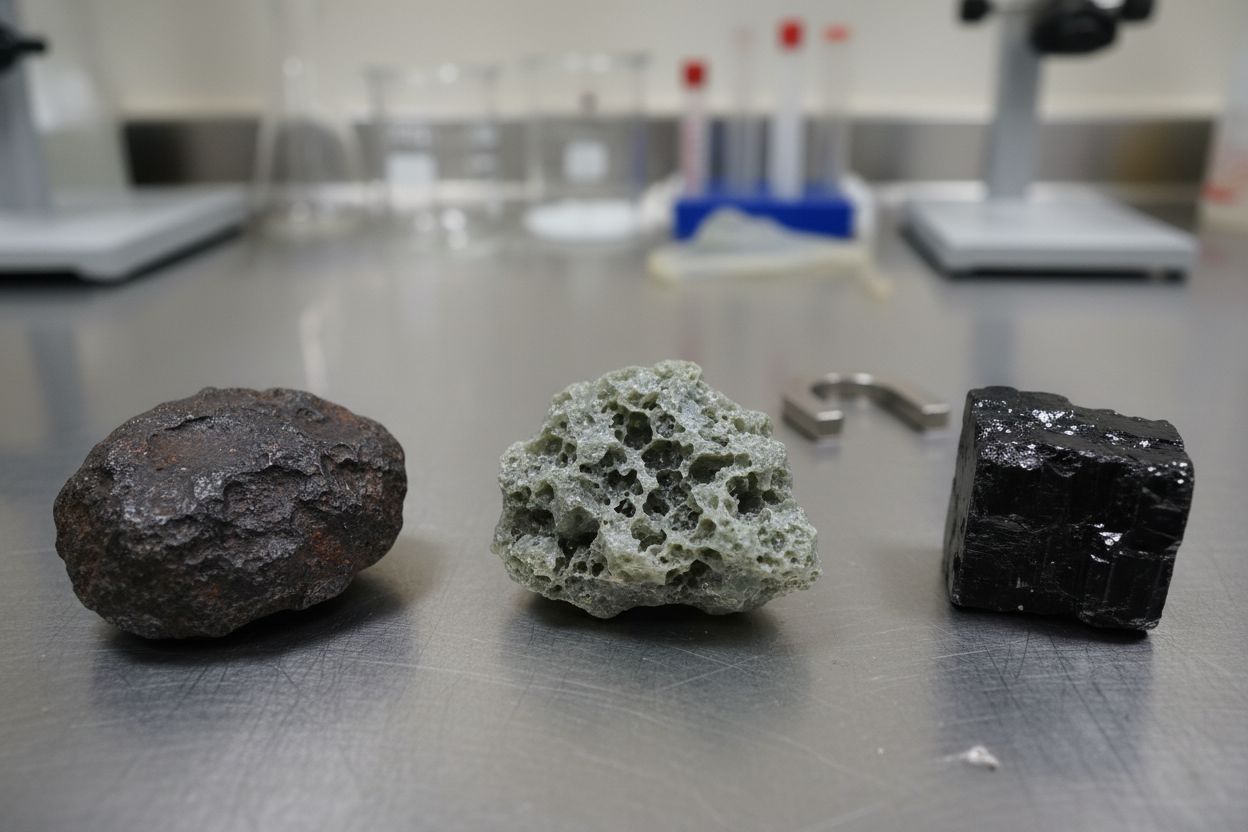
Common types of meteorites
A quick reference to the ones people ask about most. Not sure which you have? Snap a photo above and let the AI name it.
Furnace slag
The number one meteorwrong. Glassy, full of round bubbles, often oddly colourful, and much lighter than it looks. Common near old foundries, forges and railway lines.
Magnetite and hematite
Naturally magnetic iron minerals. Heavy and dark like a meteorite but with a crystalline structure and a distinctive streak, black for magnetite, red-brown for hematite.
Iron meteorites
The real thing when it happens. Very dense, solid metal, and when cut and etched they show the crosshatched Widmanstätten pattern, which nothing on Earth reproduces.
Stony meteorites
The most common genuine type and the hardest to spot. Grey interior with small metal flecks and tiny round chondrules, under a dark crust.
Basalt and volcanic rock
Dark and dense enough to raise hopes, but usually full of gas vesicles, which no meteorite has.
Industrial and machinery iron
Worn ploughshare fragments, grinding balls, and rusted machine parts. Rounded by wear rather than by melting, and often with a flat face or a bolt hole somewhere.
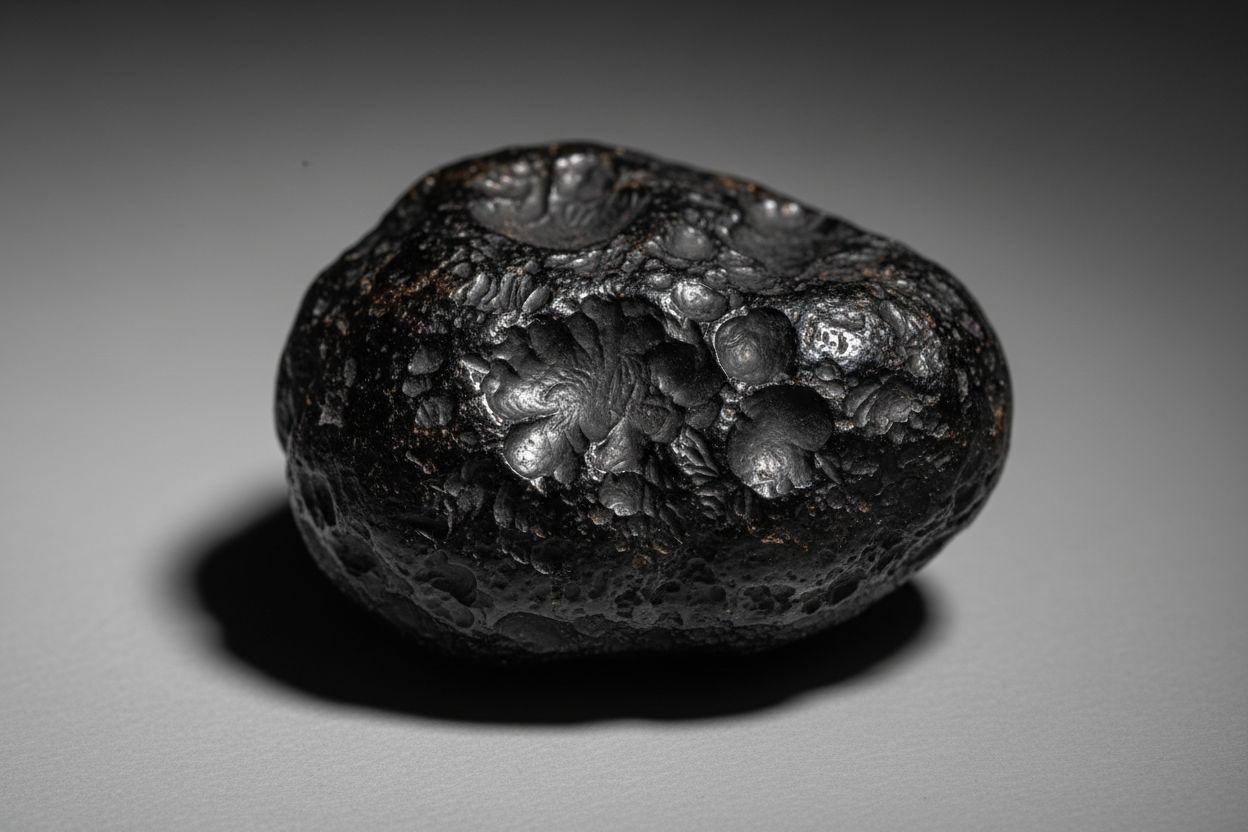
Why identifying meteorites matters
A genuine meteorite is scientifically interesting and can be valuable, which is exactly why so many people want their rock to be one. Knowing the real criteria saves you from paying for lab testing on a piece of furnace slag, and on the rare occasion the signs do line up, it tells you to take the next step seriously.
What helps identify meteorites
Fusion Crust
A thin, dark, slightly matte skin formed as the outside melted on the way down. Fresh falls have it. Weathered ones lose it and turn rusty brown.
Density and Weight
Most meteorites feel noticeably heavier than an ordinary rock of the same size because of their iron and nickel content.
Magnetism
A strong magnet sticks to most meteorites. It also sticks to magnetite and to plenty of industrial iron, so this test rules things out rather than in.
Regmaglypts
Shallow thumbprint-like dimples in the surface, formed by melting during descent. Distinctive when present and hard to fake.
No Vesicles
Meteorites do not have gas bubbles. Bubbles and holes are the single clearest sign that you are holding slag or volcanic rock.
Meteorite or slag?
This one comparison settles most cases. Slag is full of round bubbles, meteorites have none. Slag is often light for its size, meteorites are heavy. Slag frequently shows glassy greens and blues on a broken face, meteorites show grey stone or bright metal. If your rock has holes in it, the answer is almost always slag, however dark and heavy it looks.
Photo tips for the best identification
- 1Photograph the whole rock plus a close-up of the surface texture, since crust and dimples are what the identification hangs on.
- 2Say whether a magnet sticks, how heavy it feels compared to a normal rock its size, and whether you can see any bubbles or holes.
- 3If a corner is broken or you can file a small window, photograph the fresh interior. Bright metal flecks in a grey matrix are meaningful.
- 4Note where you found it. Deserts and ice fields preserve meteorites well, while industrial and rail sites produce slag that looks convincing.
Frequently asked questions
How do I know if this is a real meteorite?
Check five things: a dark fusion crust, unusual weight for its size, magnetic attraction, shallow thumbprint dimples, and the complete absence of bubbles. Photograph the rock and the AI reports which of those it can see and how confident it is.
My rock is magnetic. Is it a meteorite?
Probably not. Magnetite is a common natural mineral that is strongly magnetic, and so is a great deal of industrial iron and slag. Magnetism is worth knowing but on its own it means very little.
What is a meteorwrong?
It is the collector term for the rocks people bring in convinced they have a meteorite. Furnace slag, magnetite, hematite, concrete with iron in it, and old machinery fragments make up almost all of them.
What should I do if it might be real?
Do not clean or cut it. Photograph it, record exactly where it was found, and contact a university geology department or a national meteorite collection. Many will examine a suspected find for free, and provenance matters as much as the rock itself.
Identify meteorites on the go
Get the What Is This app for unlimited scans, offline mode, and a history that syncs.