What Bird Is This Feather From?
A single feather carries enough information to name the bird surprisingly often. Our AI reads the barring, the shape and the asymmetry to suggest a species or family, works out whether it is a flight, tail or body feather, and explains what the pattern is for.

- Free to try
- No sign-up
- Results in seconds
Take or upload a photo
AI identifies anything in seconds
1 free identification, no account needed
Feathers do different jobs and look different because of it. Flight feathers are stiff and asymmetric so they can cut air. Tail feathers are broad and more symmetrical for steering. Body feathers are soft and rounded, and down has no proper vane at all. Working out which one you have is the first step, because it decides which part of the bird you are comparing against.
Below are the feather types and the patterns that point to particular groups of birds. Photograph yours flat, with a ruler, and once more with light behind it.
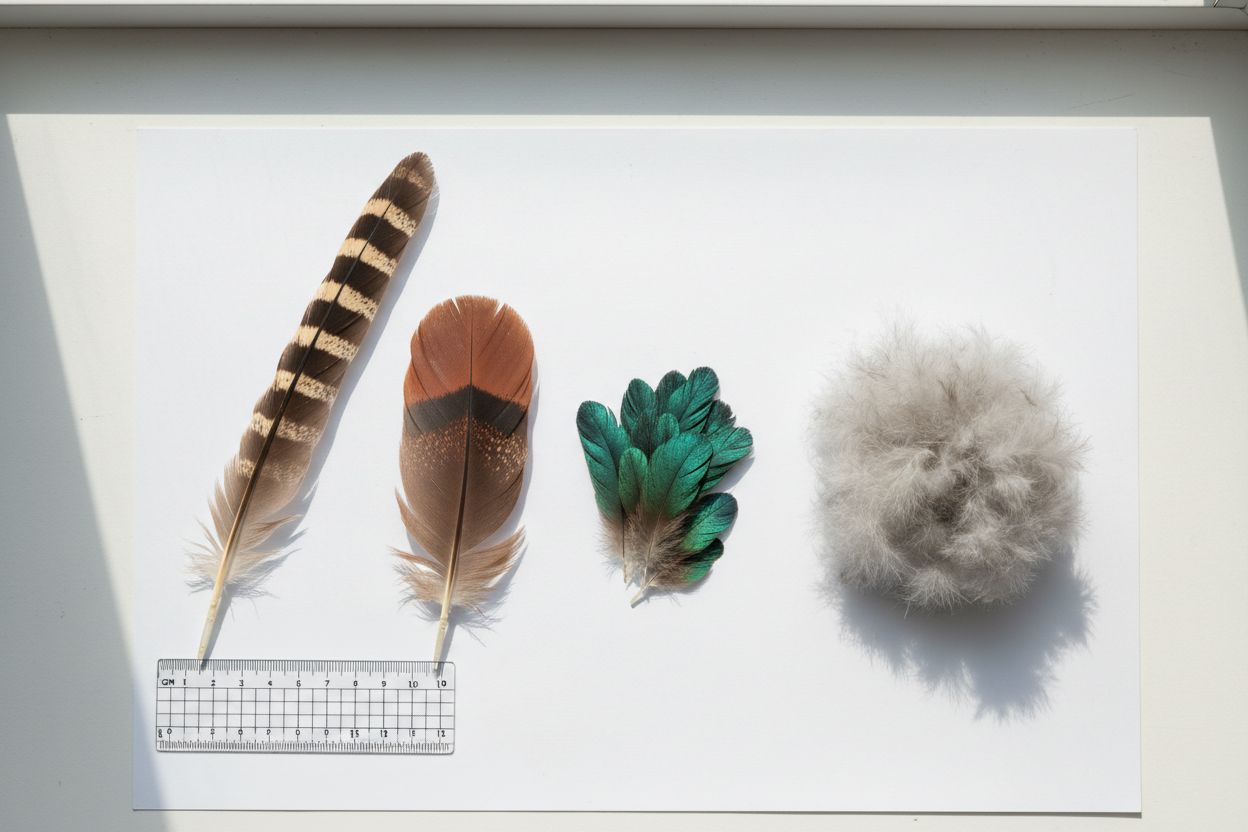
Common types of feathers
A quick reference to the ones people ask about most. Not sure which you have? Snap a photo above and let the AI name it.
Primary flight feathers
The long, stiff, strongly asymmetric feathers from the wingtip. The most identifiable of all because size and barring are both distinctive.
Secondary flight feathers
Shorter and less asymmetric, from the inner wing. Often where the speculum sits on ducks, a bright iridescent patch that names the species outright.
Tail feathers
Broad and fairly symmetrical, frequently with bold barring or a coloured tip. Central tail feathers are the most symmetrical of all.
Body and contour feathers
Small, rounded, soft at the base. Common finds and the hardest to identify, since many species share the same muted browns and greys.
Down feathers
Fluffy, no firm shaft, purely for insulation. Almost never identifiable to species and usually not worth photographing.
Raptor and owl feathers
Strongly barred, often large. Owl feathers have a soft comb-like fringe on the leading edge that silences flight and is unmistakable up close.
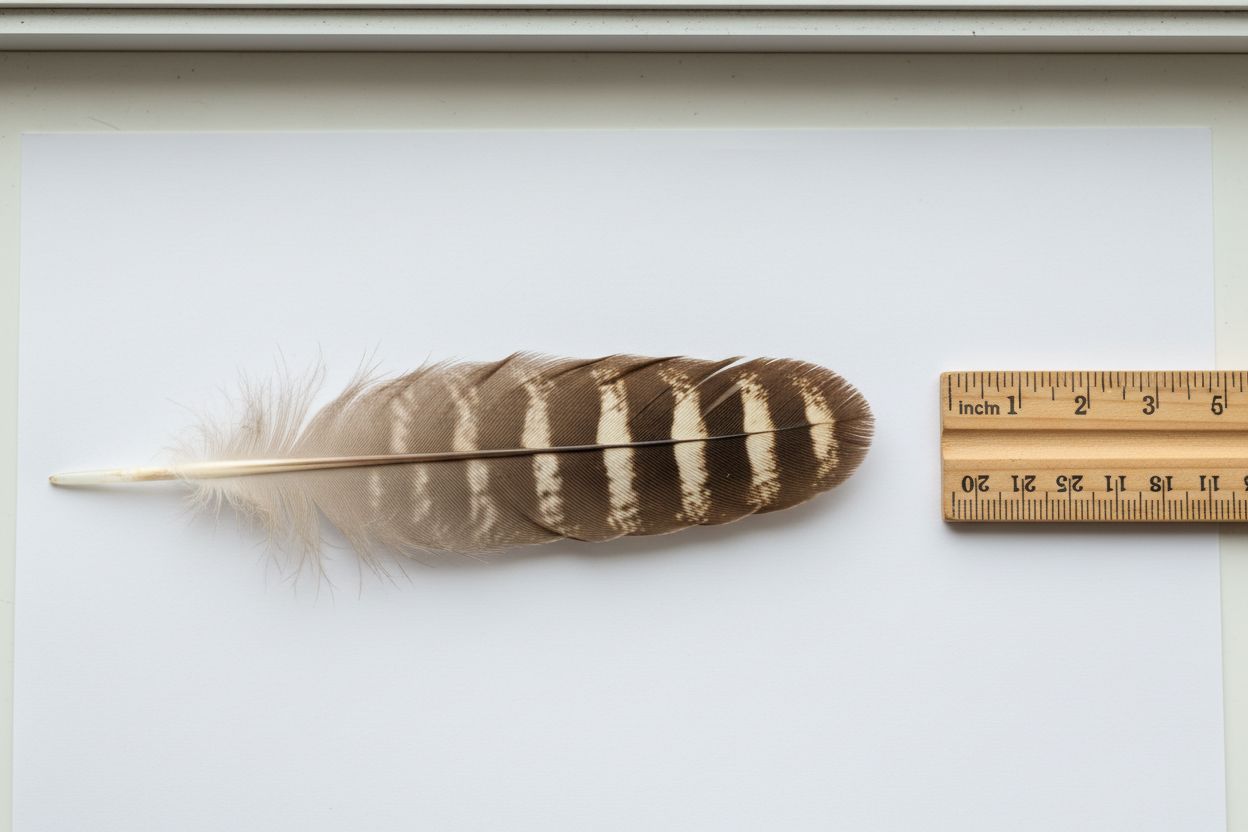
Why identifying feathers matters
A feather on the ground is usually the only trace you get of a bird that was there. Identifying it tells you what is living in your garden or woodland, and sometimes tells a story, since a scatter of feathers in one spot is the aftermath of a kill rather than a moult. It also matters legally, because keeping feathers from wild birds is restricted in many countries.
What helps identify feathers
Barring and Pattern
Crossbars, spots, stripes and edge colour are the most diagnostic features. Regular barring points strongly to raptors and game birds.
Shape and Asymmetry
A flight feather has a narrow leading vane and a wide trailing vane. The more asymmetric it is, the further out on the wing it sat.
Size
Length narrows the field faster than anything else, which is why a photo without a ruler is far less useful than one with.
Iridescence
Green, blue and purple sheen that shifts with the angle comes from feather structure, not pigment, and points to a specific set of families.
Where It Was Found
Habitat and region cut the list dramatically. A barred brown feather means different birds in a British wood and a North American desert.
Moulted feather or predator kill?
A single feather in an open area is almost always a normal moult, which birds do gradually so they can keep flying. A dense pile in one spot means something died there. Look at the base of the shaft. If it is clean and intact, the feather fell out naturally. If it is bent, snapped or has tissue attached, it was pulled. Feathers cut cleanly across the shaft point to a fox or cat, while a bird of prey plucks and leaves the shaft bent but whole.
Photo tips for the best identification
- 1Lay the feather flat on plain white paper with a ruler beside it and photograph straight down.
- 2Take a second photo with light coming through the feather. Backlighting reveals faint barring that a flat shot loses.
- 3If there is iridescence, tilt the feather until the colour flares and capture that, since a dull angle hides it completely.
- 4Say where and when you found it, and whether there were many feathers together or just one.
Frequently asked questions
What bird does this feather belong to?
Photograph the feather flat with a ruler and the AI suggests the most likely species or family from pattern, shape and size, and tells you where on the bird it sat. Where several birds share a pattern it names them and explains the difference.
Can you identify a bird from just one feather?
Often to a family, sometimes to a species. Strongly barred raptor feathers and boldly patterned game bird feathers are quite identifiable. A plain brown body feather from a small songbird frequently is not, and the honest answer there is a shortlist.
Is it legal to keep feathers I find?
In the United States the Migratory Bird Treaty Act makes it illegal to possess feathers from most native wild birds, even ones found on the ground. The UK and EU have their own restrictions, particularly for birds of prey. Photograph the feather and leave it where it is unless you are certain of your local law.
Why do I keep finding feathers in one spot?
A tight pile of feathers in one place is usually a plucking post where a predator ate a bird. Feathers snipped cleanly suggest a mammal, feathers with the shaft bent and stripped suggest a bird of prey. Scattered single feathers over a wide area are normal moulting.
Identify feathers on the go
Get the What Is This app for unlimited scans, offline mode, and a history that syncs.