What China Pattern Is This? Identify Maker and Pattern
Inherited china almost never comes with paperwork. Our AI reads the backstamp on the underside, names the maker, and works from the border, the shape and the decoration to suggest a pattern and a period, so you can find replacements or decide what to do with a set.

- Free to try
- No sign-up
- Results in seconds
Take or upload a photo
AI identifies anything in seconds
1 free identification, no account needed
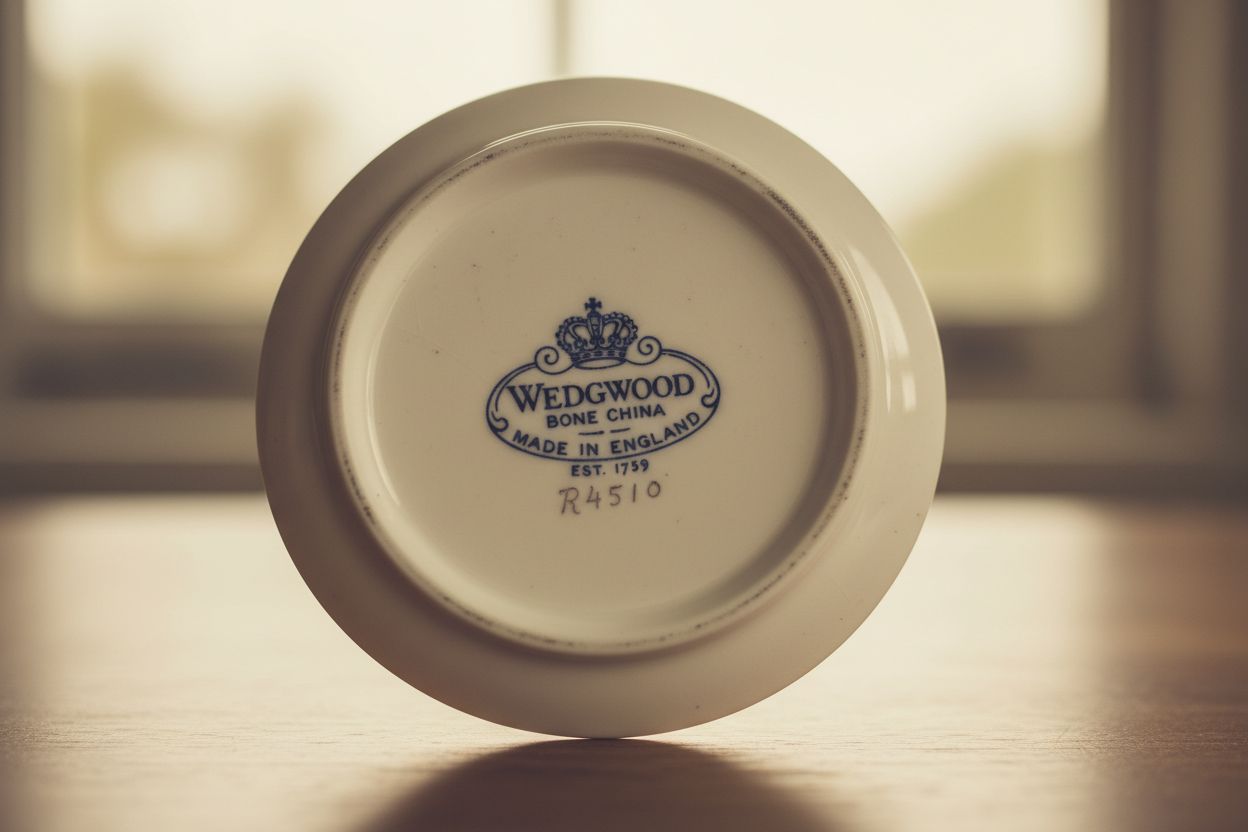
China is identified from the bottom up. The backstamp names the maker and frequently the pattern, and the form of the mark itself dates the piece, because factories redesigned their marks every few decades. Where the mark is worn or missing, the border treatment, the rim shape and the decoration method carry the identification instead.
Below are the makers and styles that turn up most often in inherited sets. Photograph the backstamp first, filling the frame.
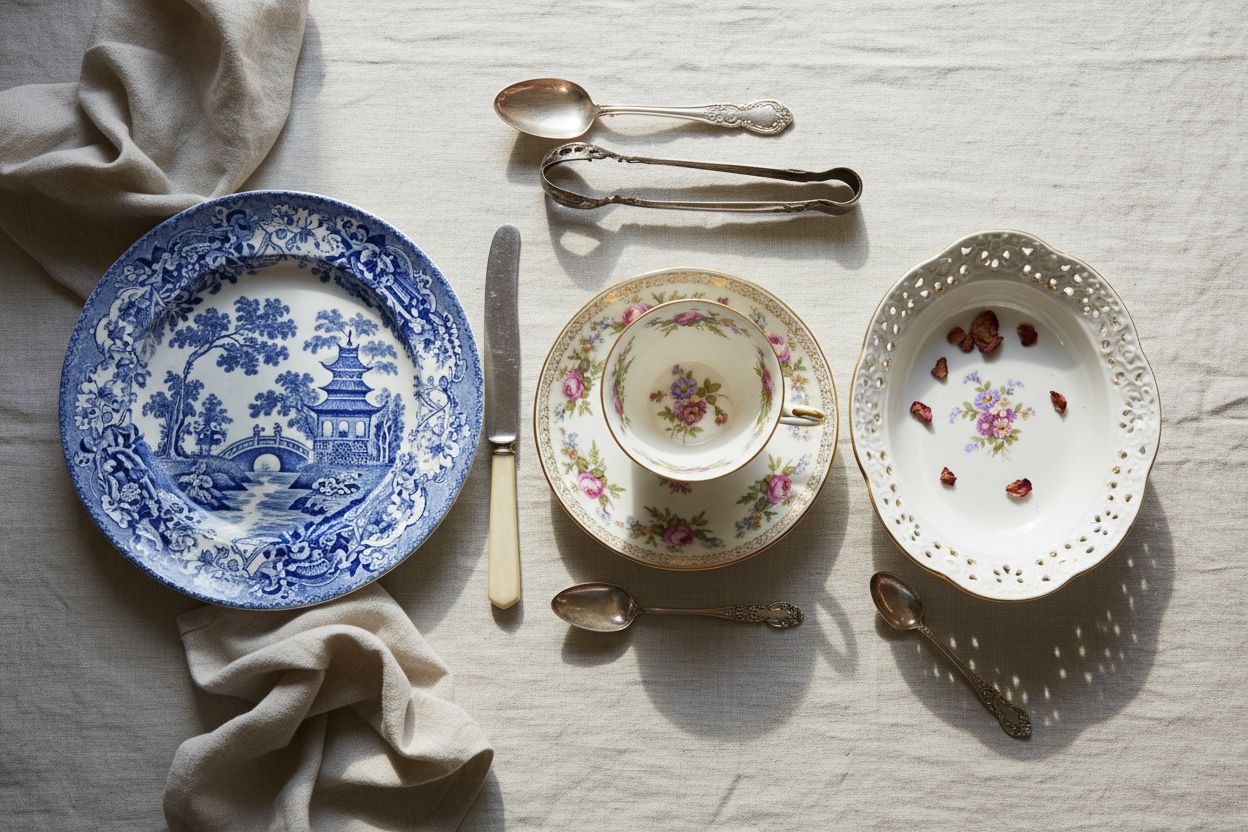
Common types of china patterns
A quick reference to the ones people ask about most. Not sure which you have? Snap a photo above and let the AI name it.
English bone china
Royal Albert, Royal Doulton, Wedgwood, Aynsley, Paragon. Thin, translucent, usually floral, and by far the most common inherited china in the English speaking world.
Japanese porcelain
Noritake and others. Often marked Nippon before 1921 and Made in Japan after, which is a genuinely useful dating shortcut.
Blue and white transferware
Willow pattern, Blue Italian, Flow Blue. Transfer printed in cobalt, made in enormous quantities from the 1800s onward, and still very collectable.
Limoges and French porcelain
Hard-paste porcelain from Limoges, frequently white with gold and hand-painted decoration. Many different factories used the Limoges name.
German and Bavarian china
Rosenthal, Hutschenreuther, Bavaria marks. Well made and often elaborately gilded, with marks that changed clearly over the twentieth century.
American dinnerware
Lenox, Homer Laughlin, Fiesta. Generally more casual, often earthenware rather than bone china, and collected more for colour than for pattern.
Why identifying china patterns matters
You cannot sell, insure or complete a set you cannot name. Most inherited china is worth modest money, but the exceptions matter, and the difference between a common post-war pattern and an early hand-painted one is entirely in the mark and the decoration. Naming the pattern is also the only way to find replacement pieces, since replacement dealers index everything by pattern name.
What helps identify china patterns
The Backstamp
The mark on the underside carries the maker, often the pattern name or number, and frequently a symbol that dates the piece to a period.
Body and Translucency
Bone china is thin, warm white and lets light through when held up. Porcelain is white and dense. Earthenware is thicker, opaque and heavier.
Border and Rim Treatment
Gold banding, scalloped rims, embossed edges and border patterns are often more diagnostic of a pattern than the central motif.
Decoration Method
Transfer printed, hand painted over glaze, or decal applied. Visible brushwork and slight variation between pieces indicate hand painting and more value.
Country of Origin Wording
Marks reading simply England, or Made in England, or bearing Bone China, each belong to different date ranges and narrow the era quickly.
Bone china, porcelain or earthenware?
Hold a plate up to a bright window with your hand behind it. Bone china is thin enough that you will see the shadow of your fingers through it, and it rings clearly when tapped. Porcelain is dense and white, mostly opaque, and also rings. Earthenware is thick, completely opaque, noticeably heavier, and makes a dull thud rather than a ring. Bone china and porcelain generally carry more value, and the difference is obvious once you have held both.
Photo tips for the best identification
- 1Photograph the backstamp first, filling the frame, in good light. That single image does most of the identification.
- 2Take a second photo of the full plate face on, showing the whole border, not just the middle.
- 3Hold a plate up to a window and photograph it backlit if you are unsure of the body. Bone china glows, earthenware does not.
- 4If there is a number alongside the mark, include it. Pattern numbers tie directly to registers for most major makers.
Frequently asked questions
How do I identify my china pattern?
Photograph the backstamp on the underside and the full face of a plate. The mark gives the maker and often the pattern name or number, and the border and decoration do the rest. The AI names the maker, suggests the pattern, and gives a likely period.
What does the backstamp tell me?
Usually the maker, sometimes the pattern name, sometimes a number, and often a date clue. Makers changed their marks over the years, so the specific form of the mark, the wording and the symbols, can narrow a piece to a decade or two.
Is my grandmother's china worth anything?
Most mid-century dinner services sell for modest amounts because so many were made and few people want formal china now. Value concentrates in early hand-painted pieces, rare patterns, complete large services, and a handful of names collectors chase. Identifying the maker and pattern is the first step to knowing which you have.
Can I find replacement pieces for my set?
Yes, and it is usually straightforward once you have a name. Replacement dealers hold enormous inventories indexed by maker and pattern, so the pattern name is the only thing standing between you and a matching cup.
Identify china patterns on the go
Get the What Is This app for unlimited scans, offline mode, and a history that syncs.