Vole vs Mouse: How to Tell Them Apart
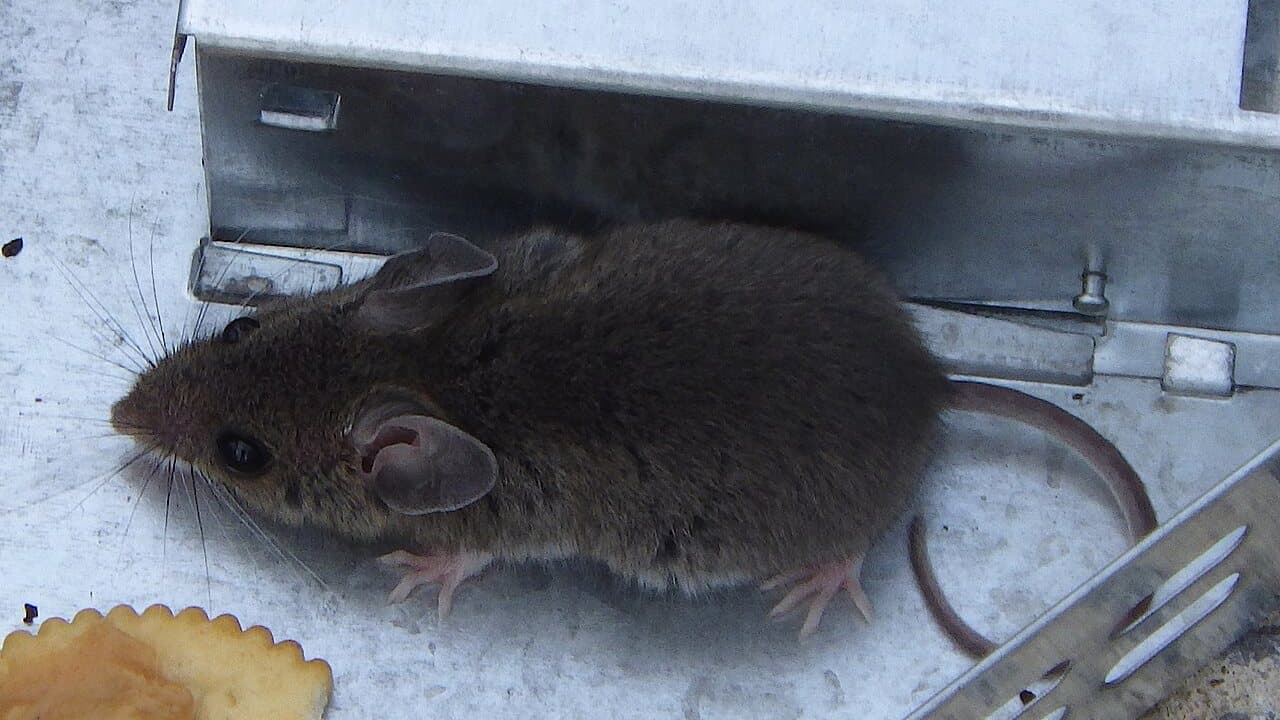
A vole is a stocky little rodent with a blunt face, tiny ears hidden in its fur and a short tail. A mouse is slender, with a pointed nose, big ears and a long thin tail about as long as its body. The other difference matters more for what you do next: voles live outside in lawns and gardens and almost never come into houses, while mice move in. If the rodent is in your kitchen, it is a mouse. If something is cutting trails through your lawn and chewing the bark off shrubs, it is a vole.
Side by side
| Feature | Vole | House mouse | Deer mouse |
|---|---|---|---|
| Body | Stocky, round | Slender | Slender |
| Length (without tail) | About 3 1/2 to 5 inches | About 2 1/2 to 3 1/2 inches | About 3 to 4 inches |
| Tail | Short, about an inch or two, furry | Long, thin, nearly hairless, about body length | Long, sharply two-toned: dark on top, white below |
| Face | Blunt, rounded | Pointed | Pointed |
| Ears | Small, mostly hidden in fur | Large, prominent | Large |
| Eyes | Small | Small | Large and dark |
| Fur | Brown to gray, coarse | Gray-brown, lighter belly | Brown above with a crisp white belly and white feet |
| Lives | Lawns, fields, gardens, under mulch and snow | Inside houses, garages, barns | Woods and fields; enters cabins, sheds, garages and rural homes |
The tail is the quickest check from a distance or in a photo. A long, thin, bare tail trailing behind means mouse. A stubby furry tail means vole.
Read the signs
| What you find | Points to |
|---|---|
| Narrow trails clipped through the grass, 1 to 2 inches wide, visible after snow melts | Voles |
| Small open holes in the lawn or garden with no dirt mound | Voles |
| Bark chewed off the base of young trees and shrubs | Voles |
| Bulbs, carrots or potatoes eaten from below | Voles |
| Tiny dark droppings in drawers, along baseboards, under the sink | Mice |
| Shredded paper or insulation nests in walls, cabinets or appliances | Mice |
| Gnawed food packages in the pantry | Mice |
| Scratching in walls or ceilings at night | Mice |
Voles leave droppings too, but outdoors along their runways: small, greenish to brown pellets in little piles. Finding droppings inside the house points to mice, not voles.
Why one stays outside and the other comes in
Voles eat grass, roots, bulbs, seeds and bark, all of which are outdoors, and they live in shallow tunnels and surface runways under grass, mulch and snow. A house offers them nothing. House mice evolved alongside people and live on stored food, crumbs and pet food; a warm wall with a kitchen nearby is ideal habitat. That is why mice move indoors in fall as temperatures drop and outdoor food runs short, and why most homeowners notice them between October and December.
Boom and bust
Vole populations swing dramatically, often peaking every three to five years. In a peak year, a lawn that had a few voles can have hundreds per acre, and the damage to lawns, gardens and young trees shows up all at once in spring after a snowy winter protected them. Then predators catch up and numbers crash. Hawks, owls, foxes, coyotes, snakes and cats eat huge numbers of voles; a single owl family can take hundreds in a season. Mouse problems indoors do not follow that cycle; they depend on how easy the house is to enter.
Deer mice deserve special care
Deer mice, and the closely related white-footed mice in the East, look like house mice with a cleaner two-tone coat: brown back, bright white belly and feet, and big dark eyes. They live outdoors but move into cabins, sheds, garages, campers and rural homes in fall. They are the main carrier of hantavirus in North America, a rare but serious lung disease spread when people breathe in particles from their droppings, urine or nests. When cleaning a shed or cabin where mice have been, open it up to air out for at least half an hour, wear gloves, spray droppings and nests with disinfectant or diluted bleach, let it soak, then wipe up with paper towels. Do not sweep or vacuum.
Tracks and trails in snow
Snow tells you which animal you have. Mice bound across the surface, leaving paired prints in little groups, often with a thin line where the tail dragged, and they head straight for cover, woodpiles and buildings. Voles stay under the snow, tunneling along the ground; their network of tunnels and clipped grass shows up as winding brown trails on the lawn the day the snow melts. If tracks lead into your garage door, they are mice. If the lawn looks like a map of tiny canals in March, they were voles.
Shrews, the third small one
Shrews are the other small animal that gets called a mouse. They have a long, pointed, twitchy snout, tiny eyes, small ears and short velvety fur, and they eat insects and worms rather than seeds. They are often what a cat brings home, and they sometimes wander into basements and garages. They do no harm to houses or gardens.
Pets, kids and traps
Whichever animal it is, place snap traps where pets and children cannot reach them: inside a covered bait box, behind appliances, or under a box with an opening cut for the rodent. Outdoors, cover vole traps set across runways with an upside-down bucket or a board so birds and pets cannot trigger them. Glue traps are cruel, catch nontarget animals and are banned in some places; snap traps kill faster and are easier to use safely.
Photographing a small rodent
A side view that shows the tail, ears and face is enough. The animal track identifier handles both the animal and its signs: vole runways, holes and chewed bark, and mouse tracks in dust or snow, which show four toes in front and five behind in tiny prints. Put a coin in the frame for scale. A mouse caught in a trap is the easiest photo to identify; a blurry shot of something darting under the stove is the hardest, and in that case the droppings are better evidence.
What to do
Voles. Reduce cover: mow regularly, keep mulch a few inches away from trunks, and clear dense ground cover and weeds near beds. Wrap young tree trunks with hardware cloth guards that go a few inches below the soil and above the snow line. Snap traps baited with apple or peanut butter, set across runways and covered with a box to protect pets and birds, work for heavy populations. Plant bulbs in wire cages if voles keep eating them. For the damage they cause compared with moles, see the mole vs vole guide.
Mice. Seal entry points: any gap larger than about 1/4 inch around pipes, vents, doors, siding and the foundation. Steel wool packed into holes and covered with caulk, door sweeps and screened vents keep them out. Store food in sealed containers and clean up crumbs and pet food. Snap traps baited with peanut butter, placed every few feet along walls with the trigger toward the wall, are effective; mice explore new objects quickly, so results usually come within days.
Skip the plug-in ultrasonic devices and the peppermint oil; neither has good evidence behind it for either animal, and voles outdoors are not affected at all. For bigger rodents in the house, the rat vs mouse guide covers how to tell a young rat from an adult mouse.
Frequently asked questions
Do voles come into houses?
Rarely. Voles live in grass, gardens and mulch and almost never move into homes. A small rodent inside the house is almost always a house mouse or deer mouse.
What does a vole's tail look like?
Short, about an inch or so long, covering roughly a quarter to a third of the body length, and furry. A house mouse's tail is thin, mostly hairless and about as long as its body.
Are deer mice dangerous?
Deer mice can carry hantavirus, which is spread through their droppings, urine and nesting material. Clean up after them carefully: ventilate, wet everything with disinfectant before wiping, and never sweep or vacuum dry droppings.
What damage do voles do?
Voles make surface runways through lawns, eat roots, bulbs and vegetables, and gnaw bark at the base of young trees and shrubs, often under snow in winter.