Moth vs Butterfly: How to Tell Them Apart
Look at the antennae. A butterfly's antennae are thin with a club or knob at the tip, like a matchstick. A moth's antennae are feathery, comb-like, or thin and tapering to a point, with no club. That check is right far more often than any other, including time of day, color or how the wings are held. The rest are useful supporting clues, each with its exceptions.
Five checks, ranked
| # | Check | Butterfly | Moth | Reliability |
|---|---|---|---|---|
| 1 | Antennae | Thin with a club at the tip | Feathery, comb-like, or threadlike with no club | Very high |
| 2 | Wings at rest | Folded upright over the back, or held open while basking | Flat, spread to the sides, or folded like a tent over the body | Good |
| 3 | Body | Slender, smooth-looking | Stout, fuzzy | Good |
| 4 | Time active | Day | Mostly night | Moderate; many moths fly by day |
| 5 | Pupa | Bare, hard chrysalis | Often wrapped in a silk cocoon, or buried in soil | Good, when you find one |
There is also a hidden structural difference: most moths have a bristle called a frenulum that hooks the front and hind wing together in flight, which butterflies lack. You will not see it in the field, but it explains why entomologists do not rely on color or habits.
The exceptions that fool people
| Insect | Why it confuses | What it really is |
|---|---|---|
| Hummingbird clearwing | Hovers at flowers in daylight, looks like a tiny hummingbird | A day-flying moth; antennae thicken toward the tip but have no true club |
| Tiger moths, like the Virginia ctenucha | Bright colors, active during the day | Moths; feathery or comb-like antennae |
| Clearwing moths | Mimic wasps, fly by day | Moths; wasp-like body with clear wings |
| Skippers | Thick, fuzzy bodies, hold wings at odd angles, look moth-like | Part of the butterfly group; antennae end in a club with a small hook |
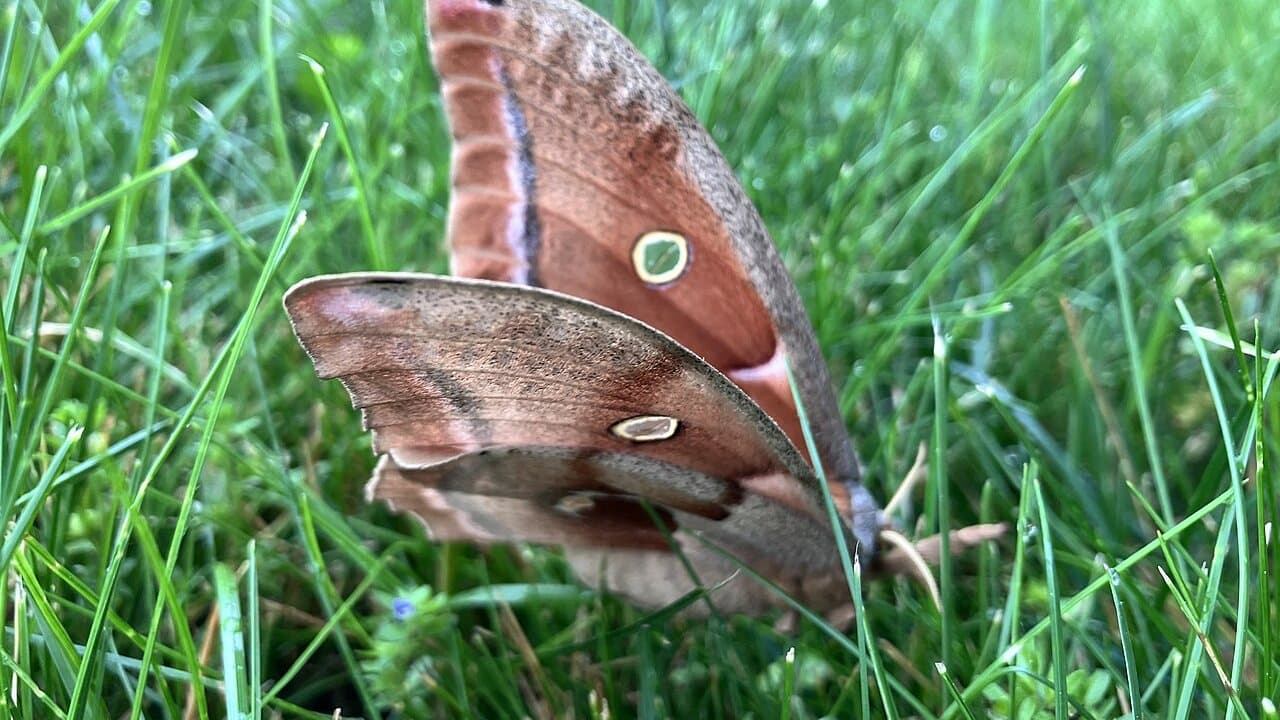
| Luna and polyphemus moths | Huge and beautiful, so people assume butterfly | Giant silk moths; broad feathery antennae, especially on males |
| Mourning cloak and other butterflies at lights | Dark, seen near houses | Butterflies; check the clubbed antennae |
Color is the worst check. Many moths are brightly colored, and many butterflies are drab brown or gray on the underside. The idea that moths are dull and butterflies are colorful is wrong often enough to ignore.
Big moths people mistake for butterflies
| Moth | How to spot it |
|---|---|
| Luna moth | Pale green wings with long trailing tails on the hindwings; up to about 4 inches across |
| Cecropia moth | The largest moth in North America, up to about 6 inches, reddish brown with white and red bands and eyespots |
| Polyphemus moth | Tan to brown with a large eyespot on each hindwing |
| Io moth | Yellow with a big black and blue eyespot on each hindwing; its caterpillar has stinging spines |
| Sphinx moths | Fast, streamlined, hover at flowers at dusk; their caterpillars are the hornworms on tomatoes |
Some butterflies do the opposite and pass for moths. Anglewings like the question mark and eastern comma fold their wings to show a dull brown underside that looks like a dead leaf, and they often rest on tree trunks. Their antennae still end in a club.
By the numbers
Moths vastly outnumber butterflies. North America north of Mexico has roughly 800 butterfly species and well over 10,000 moth species. Worldwide the ratio is similar, around ten moths for every butterfly. So when you find an unfamiliar winged insect on your porch at night, the odds strongly favor moth before you even look at it.
Why moths circle lights
For a long time the standard explanation was that moths navigate by the moon and get confused by nearer lights. A 2024 study that filmed insects in flight around lights found something simpler: flying insects keep their backs turned toward the brightest part of the sky, and a lamp close by makes them tilt and circle around it instead of flying straight. Whatever the mechanism, porch lights pull in huge numbers of moths, which is why you see more moths at your door than anywhere else. Warm-colored or yellow bulbs attract far fewer.
Why moths matter
Moths pollinate many plants at night, and they are a major food source for bats and birds. Their caterpillars matter even more: songbirds feed their nestlings mostly caterpillars, and a single brood of chickadees can need thousands of them before the young leave the nest. Most of those caterpillars are moths. The handful of moth species that eat clothes or pantry food give the whole group a reputation it does not deserve.
Caterpillars and pupae
Both start as caterpillars, and the caterpillar alone usually cannot tell you which you have without identifying the species. The pupal stage is more telling. A butterfly caterpillar turns into a chrysalis, a hard, bare case that often hangs from a stem or leaf by a silk pad. Many moth caterpillars spin a silk cocoon around themselves before pupating, like the silk moths, or burrow into soil and pupate there. A fuzzy silk case on a twig is almost always a moth. For caterpillars themselves, the caterpillar identifier covers the species and which ones sting.
Watching for them
To see more moths than you thought existed, leave a porch light on near a white sheet on a warm, humid summer night and check it after dark. Moth enthusiasts call this mothing, and a suburban yard can produce dozens of species in one evening, from tiny micro-moths to big sphinx moths. Butterflies are easiest to watch on sunny, calm days at flowering plants like milkweed, coneflower and butterfly bush, from late morning through afternoon. Photographing both is how most people get hooked on telling them apart.
The moths inside your house
Most moths that bother people are small and live indoors, and they are clearly moths: drab, fluttery, and found near food or closets.
| Moth | Where | Look | What it means |
|---|---|---|---|
| Indian meal moth | Kitchen, pantry | Small, wings two-toned: pale near the head, coppery at the tips | Larvae in flour, cereal, nuts, birdseed or pet food. Find and toss the infested package |
| Webbing clothes moth | Closets, dark corners | Tiny, plain golden-buff, avoids light | Larvae eating wool, silk, fur or felt |
| Casemaking clothes moth | Closets | Tiny, brownish, larvae in small silk cases | Same as above |
| Drain fly | Bathroom walls, sinks | Fuzzy, moth-like, heart-shaped wings | Not a moth at all; a small fly breeding in drain gunk |
Adult moths never eat clothing; they have no working mouthparts for it, and many adult moths do not feed at all. The damage comes from the larvae, and only from a few species. The big moth on your screen door is not going to touch your sweaters.
Take the photo from the side or front
The antennae are the feature that matters, and they are thin, so the photo needs to show them clearly. The moth identifier works best with a sharp photo that includes the head and antennae, plus the wings either spread or folded. It identifies common moths down to species, including the indoor pantry and clothes moths, and the butterfly identifier does the same for butterflies. Both struggle with worn, faded specimens that have lost wing scales, with insects photographed through a window at night, and with tiny moths taken from far away. Place a cup over a moth on a wall, slide paper underneath, and photograph it in better light before letting it go.
For the larger flying insects that turn up on summer nights, the hornet vs wasp guide covers the European hornet, the one wasp that flies after dark.
Frequently asked questions
What is the easiest way to tell a moth from a butterfly?
Look at the antennae. Butterflies have thin antennae with a club or knob at the tip. Moths have antennae that are feathery, comb-like or thin and tapering to a point, with no club.
Are there moths that fly during the day?
Yes, many. Hummingbird clearwing moths, many tiger moths, wasp-mimicking clearwing moths and others are active in daylight and visit flowers like butterflies.
Are butterflies a type of moth?
Scientifically, butterflies are one branch within the larger group of moths and butterflies, Lepidoptera. Moths are not a single natural group; butterflies evolved from moth ancestors. The everyday distinction still works well for identification.
What is a skipper?
Skippers are small, fast-flying insects in the butterfly group with thick bodies and antennae that end in a club with a little hook. They look like a cross between a moth and a butterfly.