Water Bug vs Cockroach: Is It a Roach?
If it ran across your kitchen floor, came up out of a drain, or was sitting in a damp basement, it was a cockroach. "Water bug" is a polite name people use for large roaches, especially in the Northeast, and "palmetto bug" is the Southern version. True water bugs exist, but they are aquatic insects that live in ponds and only end up near houses by flying into lights. Here is how to tell which one you have, and why the difference matters for what you do next.
Three insects that share the name
| American cockroach | Oriental cockroach | Giant water bug | |
|---|---|---|---|
| Also called | Water bug, palmetto bug, sewer roach | Water bug, black beetle | Toe-biter, electric light bug |
| Size | About 1 1/2 inches | About 1 inch | About 1 to 2 1/2 inches, sometimes larger |
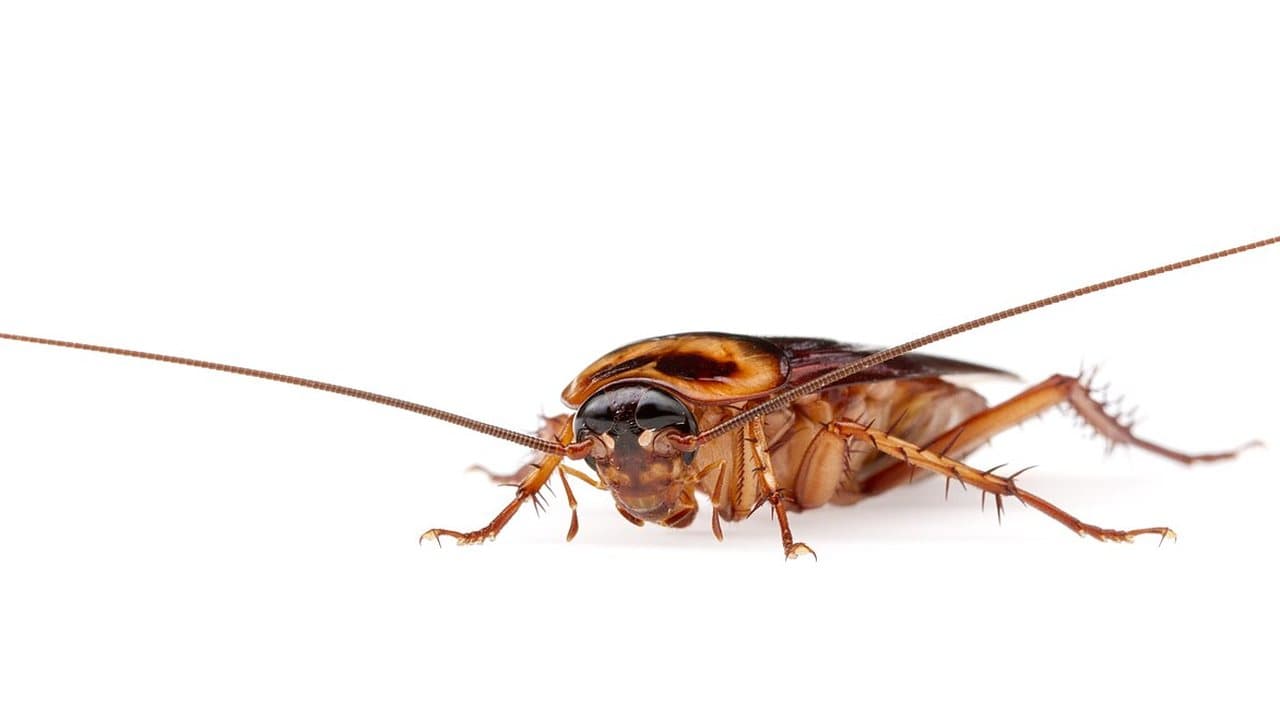
| Color | Reddish brown with a pale yellowish band around the shield behind the head | Shiny dark brown to black | Dull brown, flat, leaf-like |
| Antennae | Very long, as long as the body or longer | Long | Short and hidden under the head |
| Front legs | Thin, spiny running legs | Thin, spiny running legs | Thick, grasping pincer-like legs for catching prey |
| Wings | Full wings; can glide and fly short distances in warm weather | Females have tiny wing pads; males short wings; neither flies | Full wings, folded flat; flies at night |
| Movement | Very fast runner | Slower, sluggish | Clumsy on land; strong swimmer |
| Where | Sewers, steam tunnels, basements, kitchens, outdoors in the South | Cool, damp basements, crawl spaces, floor drains, under mulch | Ponds, lakes, slow streams; near porch lights in spring |
The two fastest checks are the antennae and the front legs. Long, whip-like antennae and thin running legs mean cockroach. Short, hidden antennae and thick, grasping front legs like a praying mantis mean a true water bug.
Decide by where it was
| Where you saw it | Almost always |
|---|---|
| Kitchen floor or counter at night | Cockroach |
| Coming out of a floor drain, tub drain or sink | American or Oriental cockroach |
| Basement or crawl space, cool and damp | Oriental cockroach |
| Garage, porch or patio in the South after dark | American or smokybrown cockroach |
| Under a porch light or in a pool in spring, flat and brown | Possibly a giant water bug |
| In a pond or swimming in a lake | Giant water bug or another aquatic bug |
A giant water bug inside a house is rare, and it usually got there by flying into a lit room or getting carried in. If it was on your bathroom floor, it was a roach.
The other cockroaches in the mix
The roaches people call water bugs are the large ones that live mostly outdoors or in sewers and come inside. The small German cockroach is a different problem and is never called a water bug.
| Cockroach | Size and look | What it means |
|---|---|---|
| American | About 1 1/2 inches, reddish brown, pale band behind the head | Often comes in from sewers, outdoors or a neighboring building |
| Oriental | About 1 inch, glossy black | Moisture problem in a basement or crawl space |
| Smokybrown | About 1 1/4 inches, uniform dark mahogany | Outdoor roach in the South, attracted to lights |
| German | About 1/2 inch, tan with two dark stripes behind the head | An indoor infestation that breeds in kitchens and bathrooms; needs action right away |
| Brown-banded | About 1/2 inch, light bands across the wings | Indoor; hides in warm, high spots like electronics |
Whether it flew is another clue. American cockroaches glide down from heights and make short flights in hot, humid weather, which is how they end up on a second-floor balcony. Smokybrown cockroaches are strong fliers drawn to porch lights. Oriental cockroaches cannot fly at all, and German cockroaches almost never do. A big roach that flew at you on a summer night in the South was most likely an American or smokybrown cockroach.
One big roach is often a visitor. Several small tan roaches in the kitchen, especially in daylight, mean German cockroaches breeding indoors, which is a much bigger job.
Signs of roaches living inside
| Sign | What it looks like | Points to |
|---|---|---|
| Droppings | Small black specks like ground pepper or coffee grounds in cabinets and drawers | Small indoor roaches, usually German |
| Larger droppings | Cylindrical pellets with ridges along the sides, about the size of a grain of rice | American or Oriental cockroaches |
| Egg cases | Brown, purse-shaped capsules, about 1/4 to 1/2 inch, behind appliances or in corners | Breeding indoors |
| Shed skins | Pale, empty roach-shaped skins | Nymphs growing in the area |
| Smell | Musty, oily odor in cabinets or closets | A sizable population |
| Daytime sightings | Roaches out in the open in daylight | Crowded hiding spots; a large infestation |
One large roach at night with none of these signs is usually a visitor from outside or the drains. Droppings and egg cases mean they are living with you.
Are they a health problem?
Cockroaches do not bite or sting people. The concern is what they carry and leave behind. They walk through sewers and garbage and then across counters and dishes, spreading bacteria to food surfaces. Their droppings, saliva and shed skins contain allergens that are a well-documented trigger for asthma, especially in children living in buildings with heavy infestations. Wiping counters before cooking and storing food in sealed containers limits the first problem; reducing the population is the only fix for the second.
Why they come up the drains
American and Oriental cockroaches live in sewers, storm drains and the soil around foundations because those places stay warm and damp. They travel through pipes and come into houses through floor drains with dry traps, gaps around pipes, cracks in foundations and spaces under doors. Heavy rain floods their usual spots and pushes them toward buildings, which is why sightings jump after storms. In older apartment buildings, they move between units through shared plumbing and wall voids.
What to do
- Keep drain traps wet. Run water in floor drains, basement showers and unused sinks every week or two; a dry trap is an open door from the sewer. Drain covers help.
- Fix moisture. Leaky pipes, damp crawl spaces and wet basements are what Oriental cockroaches need. A dehumidifier is a pest-control tool.
- Seal the entry points. Caulk gaps around pipes and wires, add door sweeps, and repair torn screens and cracked foundations.
- Use bait, not spray. Gel baits and bait stations placed along walls and near drains work better than sprays, which scatter roaches and do not reach their hiding spots. Boric acid dust in wall voids and behind appliances is a cheap long-term option.
- Outdoors, pull mulch back from the foundation, move firewood away, and switch porch lights to yellow bulbs, which attract fewer insects.
- Call a professional for German cockroaches, repeated sightings of large roaches inside, or an apartment building where the problem comes from other units.
A true giant water bug needs nothing. Carry it outside in a container, without picking it up by hand; it bites hard. It eats tadpoles, small fish and insects, and it belongs in a pond.
Photograph it from above
A photo from directly above, with the whole body, legs and antennae in frame, is enough to tell a cockroach from a water bug and usually which cockroach it is. The cockroach identifier reads body shape, the band or stripes behind the head and the wing length, which are the features that separate American, Oriental, German and smokybrown roaches. It struggles with blurry shots of a roach running, crushed specimens, and nymphs, which look different from adults. Put the bug in a clear jar or a zip bag on white paper if you can; a still bug in good light gives a confident answer.
For smaller bugs on the floor, the tiny black bug guide covers the rest.
Frequently asked questions
Is a water bug a cockroach?
Usually, yes. In everyday use, "water bug" means a large cockroach, most often the American cockroach or the Oriental cockroach, found near drains and damp areas. True water bugs are aquatic insects that live in ponds and streams and rarely come indoors.
Do water bugs bite?
True giant water bugs can give a very painful bite if handled, which is why they are called toe-biters, but it is not dangerous. Cockroaches do not bite people in any meaningful way.
What is a palmetto bug?
In the Southeast, palmetto bug is a common name for large outdoor cockroaches, usually the American cockroach or the smokybrown cockroach, that come inside occasionally.
Why do I see big roaches after heavy rain?
Rain floods the sewers, drains and outdoor spots where large cockroaches live, and they move toward drier ground, which can mean your basement, garage or kitchen.