2026-07-02
What Are These Tiny Black Bugs on My Plants? Aphids, Thrips, and the Rest
Tiny dark specks on a plant are one of five common sap-suckers. You identify them less by the bug (they are all near-invisible) and more by where they sit and what damage they leave. Get the species right and the treatment is easy. Get it wrong and you spray the wrong thing for weeks.
Where they sit tells you what they are
| Location and behavior | Pest | Damage sign |
|---|---|---|
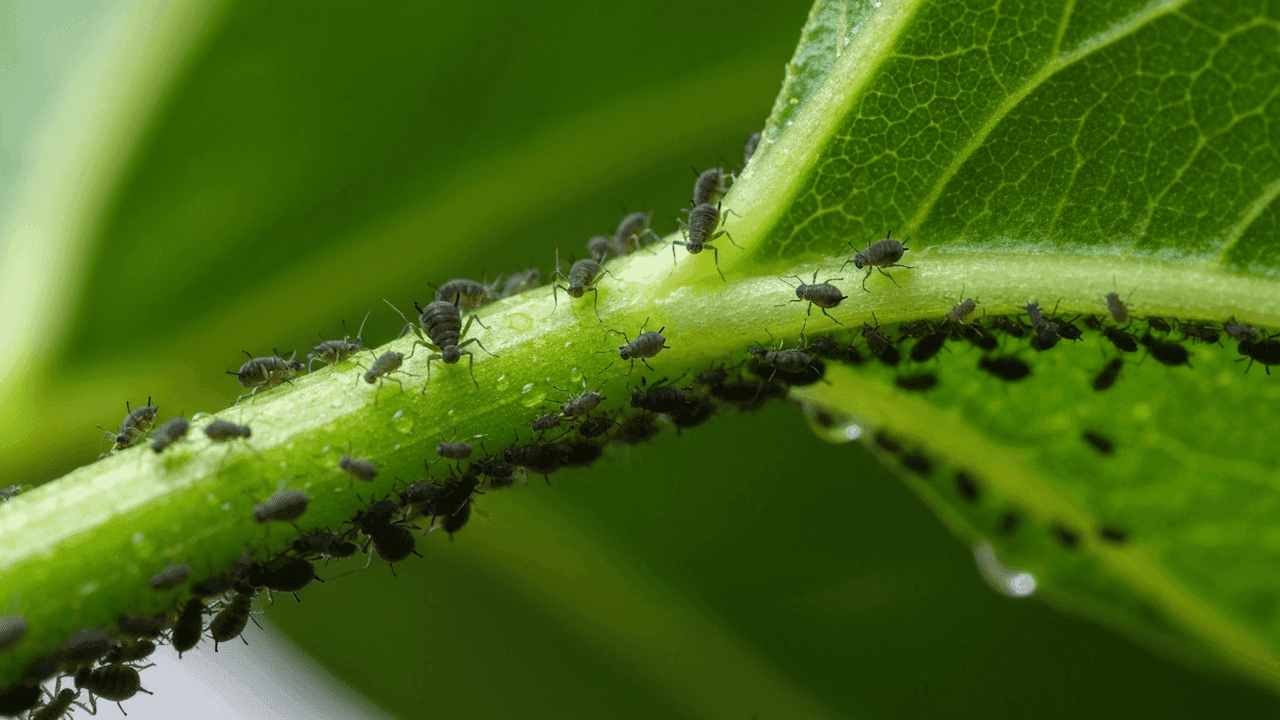
| Clustered on new growth and stem tips, slow-moving | Aphid | Sticky "honeydew," curled new leaves |
| Tiny slivers that rasp leaf surfaces, dart when touched | Thrips | Silvery streaks and black fecal dots |
| Under leaves, fine webbing, specks that move | Spider mite | Stippled, dusty, yellowing leaves |
| Fly up in a white cloud when disturbed | Whitefly | Yellowing, sticky honeydew, sooty mold |
| Hover around the soil, not the leaves | Fungus gnat | None to the plant; larvae are in the soil |
Note that only aphids and whitefly are truly "on the plant" in clusters. Spider mites are technically arachnids, thrips are slivers you often see as damage before you see the bug, and fungus gnats do not harm the plant at all. The spider mite versus true spider question comes up a lot, and the answer is that mites are the crop pest and most true spiders on a plant are beneficial predators.
The two-second field tests
- Honeydew test. Touch a leaf below the cluster. If it is sticky, you have a sap-sucker excreting sugar, which means aphids, whitefly, or scale. Thrips and mites do not leave honeydew.
- White paper test. Hold a sheet of white paper under a leaf and tap. Tiny moving specks that leave a red-green smear when wiped are spider mites. Fast-darting slivers are thrips.
- Shake test. Disturb the plant. A cloud of tiny white "dandruff" that flies up and resettles is whitefly, full stop.
Treatment by pest
| Pest | First-line fix | If it persists |
|---|---|---|
| Aphid | Blast off with water, then insecticidal soap or neem every 5–7 days | Ladybugs outdoors; systemic for heavy indoor cases |
| Thrips | Blue sticky traps, neem, remove damaged leaves | Spinosad spray on a weekly cycle |
| Spider mite | Raise humidity, spray undersides with water, then miticidal soap | Rotate to a dedicated miticide; they build resistance fast |
| Whitefly | Yellow sticky traps, insecticidal soap on leaf undersides | Neem plus vacuuming the clouds at dawn when they are sluggish |
| Fungus gnat | Dry the soil, sticky traps, bottom-water only | BTI mosquito bits in the water |
Two rules cover almost every case. First, spray the undersides of leaves, because that is where aphids, mites, and whitefly actually live. Second, repeat on a 5-to-7-day cycle, because a single spray kills adults but not the eggs that hatch a few days later. Most "the bugs came back" failures are really one-and-done treatment against a pest with a week-long egg cycle.
When the identifier helps
Aphids come in black, green, gray, and pink, and people constantly mistake dark aphids for something more sinister. A macro photo through the plant identifier or bug identifier confirms which sap-sucker you are dealing with, which is the whole game since the five treatments above only work when matched to the right pest. If the specks are on the soil surface rather than the plant, check the fungus gnat larvae post instead, because that is a watering problem, not a plant pest.